



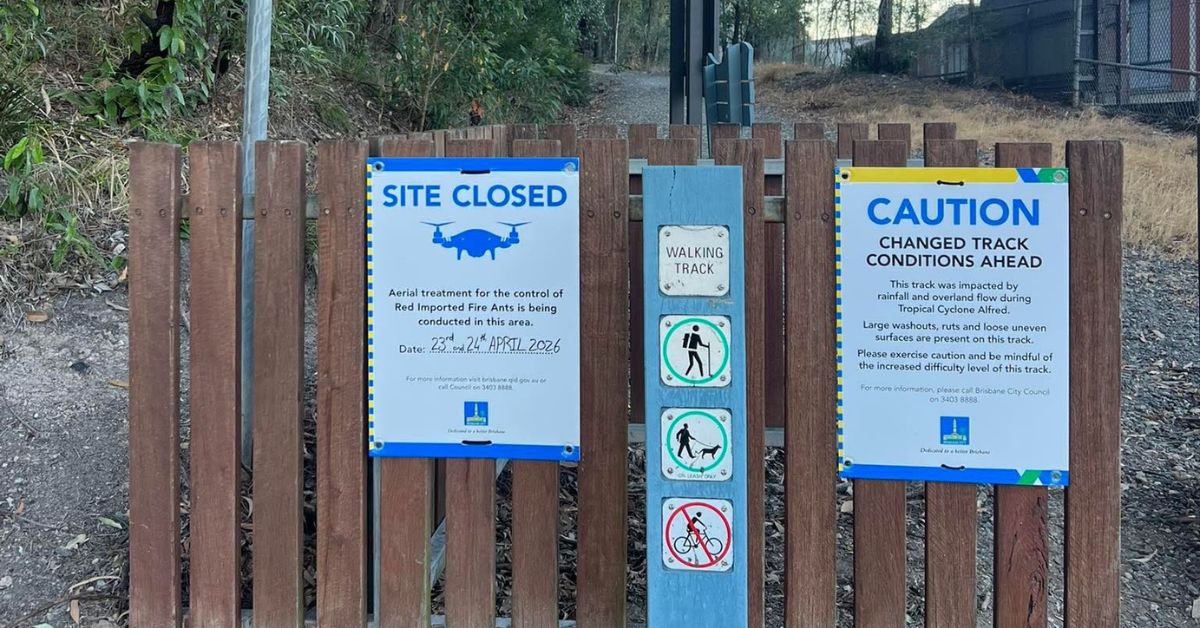
Signs posted at the Davey Street entrance to Toohey Forest in Tarragindi confirm that fire ants have been detected in the reserve, with eradication treatment now underway as part of Australia’s national effort to rid the country of one of its most dangerous invasive species.
A community member spotted the warning sign at the Davey Street entrance on 17 April, prompting questions among locals about what treatment was being used and whether households bordering the forest would receive more information.
The signs themselves are a standard part of the National Fire Ant Eradication Program‘s response procedure, posted to alert visitors that baiting or treatment activities are active in the area.
While fire ants in a beloved green space like Toohey Forest are understandably concerning, the presence of treatment notices is a positive signal. It means the pest has been identified and the eradication machinery is already moving.
Toohey Forest Is Too Important to Lose
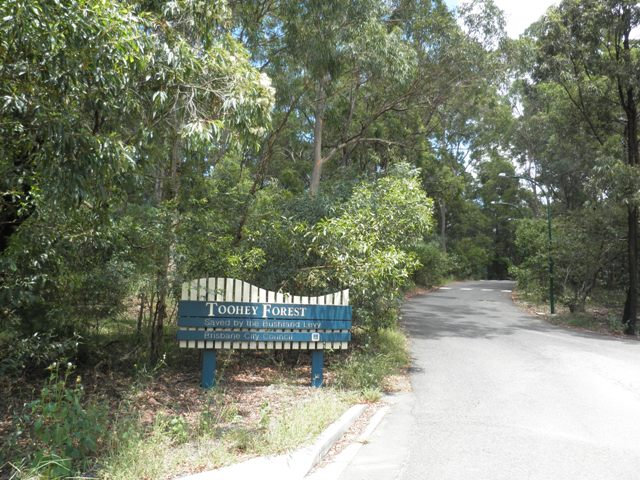
Toohey Forest is one of Brisbane’s most significant urban bushland reserves, accessible from both Tarragindi and Moorooka and home to a rich range of native wildlife. That ecological richness is precisely what makes fire ant management here so important.
Fire ants, known scientifically as Solenopsis invicta, arrived in Brisbane in 2001 via cargo ships from South America and have since spread across more than a million hectares of South East Queensland. Their sting causes a sharp burning sensation and can, in rare cases, trigger severe allergic reactions including anaphylaxis.
They pose a serious threat not just to people and pets but to native fauna, competing aggressively with ground-dwelling insects, birds and reptiles for food and territory.
Dense urban bushland like Toohey Forest is actually one of the harder environments for fire ants to establish in. Research suggests fire ants struggle to penetrate undisturbed forest with thick leaf litter, where native competitors and predators, including meat ants, green-headed ants, spiders and predatory beetles, can push back against them.
However, this natural defense is a double-edged sword. Research highlights that clearing land or using broad-scale baiting that inadvertently wipes out native ant populations can actually roll out the red carpet for fire ants. Maintaining the health of our native ‘ant-army’ is just as vital as the treatment itself. Protecting and treating a habitat like this is worth doing.
How the Treatment Works
The National Fire Ant Eradication Program treats all properties in an eradication area, whether fire ants are visible or not, and does so at no cost to landowners. In areas like this, properties may be treated up to six times over two years to ensure no nest is missed.
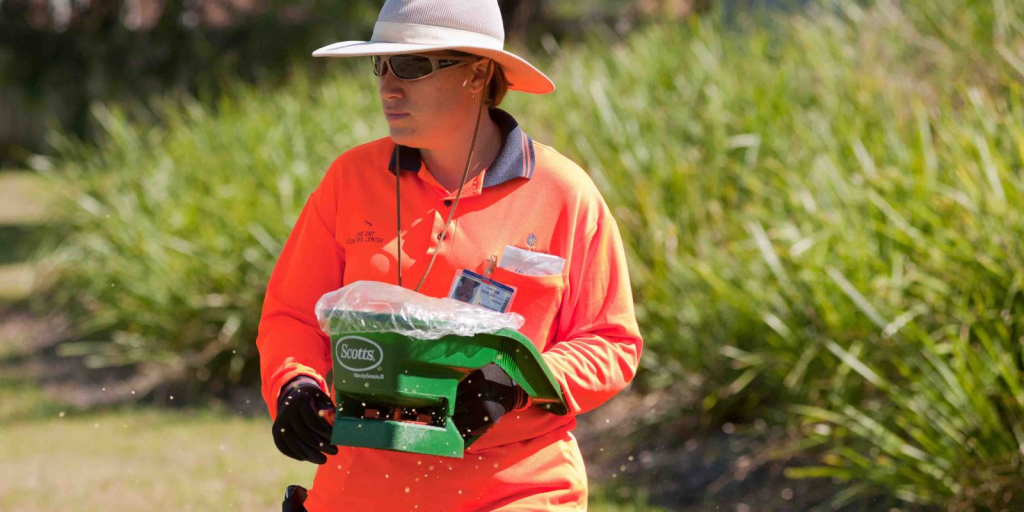
The treatment itself uses corn grit soaked in soybean oil, infused with a low-concentration insect growth regulator. Worker ants collect the granules and carry them back to the nest, where they feed them to larvae.
The larvae distribute the toxin through the colony by liquid feeding, and over several weeks the colony collapses. For an average suburban block, less than a teaspoon of insect growth regulator mixed with one cup of corn grit is all that is required.
Health authorities and the APVMA consider the treatment safe for people, pets, and the environment when applied strictly according to official guidelines. Because the bait is a targeted, low-concentration growth regulator rather than a broad-spectrum poison, it’s designed to hit the nest while leaving the wider ecosystem intact.
Spotting Fire Ants in Your Area
Residents who spot fire ants in gardens or along the forest edge must report the sighting to the National Fire Ant Eradication Program within 24 hours. Under the Biosecurity Act 2014, all Queenslanders have a general obligation to help prevent their spread.
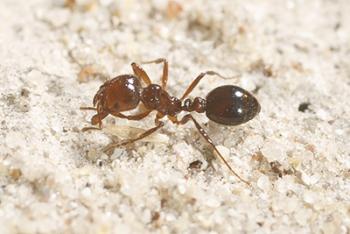
Fire ant nests are usually easy to identify. They form small mounds of loose, crumbly soil, up to 40 centimetres high, with no obvious entry holes. The ants themselves are copper-brown with a darker abdomen, ranging from two to six millimetres in size. When disturbed, they swarm quickly and aggressively.
Avoid disturbing or treating any suspected nest before reporting it, and keep children and pets well away from the area. While the bait is safe for pets if they come across it, it’s best to keep them away from treated areas so the ants have time to carry it back to the nest.
Report sightings by calling 13 25 23 or online at fireants.org.au.
Published 24-April-2026