



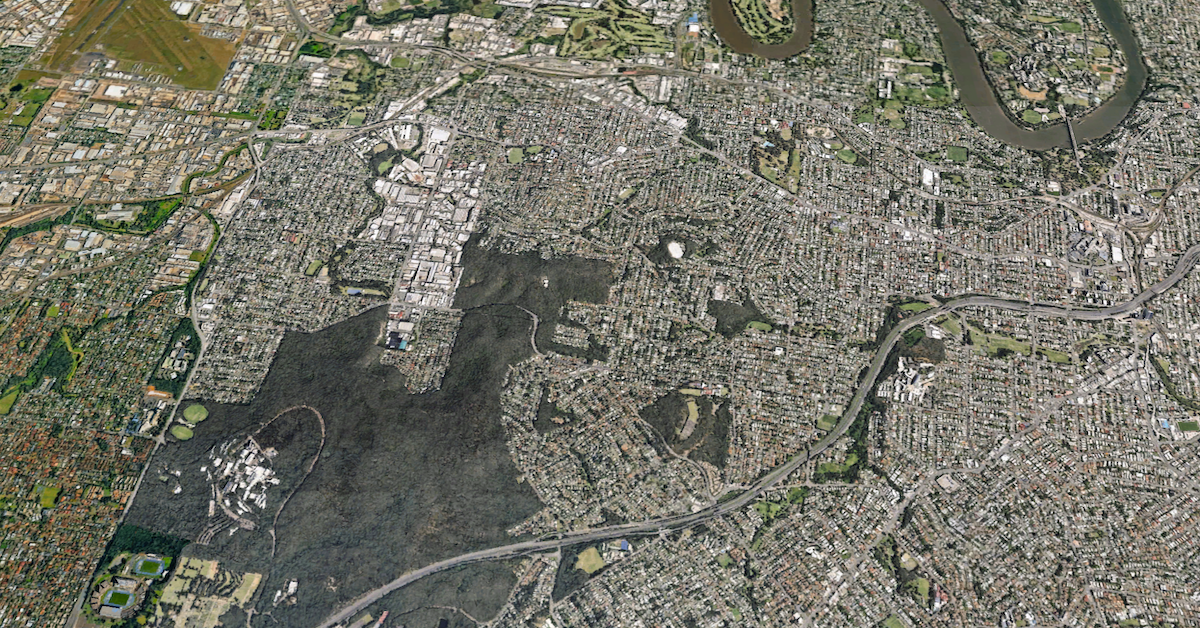
Research from Griffith University’s Nathan campus has raised fresh questions about Brisbane’s ability to deliver the higher-density housing needed to accommodate future population growth.
The study found that almost half of the city’s land zoned for apartments and townhouses is too small to support those developments, despite planning changes designed to encourage more homes in established suburbs.
Griffith Study Tests Brisbane’s Housing Strategy
Dr Rachel Gallagher, from Griffith University’s Department of Tourism and Marketing, analysed Brisbane’s zoning alongside land parcel data to assess how much of the city’s upzoned land could realistically be redeveloped.
Her research found that Brisbane’s typical residential block is around 400 square metres, while developments containing multiple dwellings generally require sites of at least 600 square metres.
Only 51.2 per cent of land currently zoned for multiple dwellings met that minimum size.
Dr Gallagher said many property owners would need to combine adjoining blocks through land assembly before redevelopment became possible, but noted the process was difficult, slow and relatively uncommon.
Challenge for Future Housing Supply
The findings come as Brisbane prepares to accommodate significant population growth over the next two decades.
Under the Queensland Government’s South East Queensland Regional Plan, Brisbane is expected to provide more than 210,000 new homes by 2046, with nearly 90 per cent intended to be delivered as higher-density housing within existing suburbs.
While upzoning has been promoted as a way to unlock more housing, the Griffith research suggests many sites may never be able to take advantage of the new planning rules because of their physical size.
Looking Beyond Planning Maps
The study found that lot size was only one hurdle facing redevelopment. Character protections, vehicle access and parking requirements could further limit opportunities in Brisbane’s established suburbs.
Dr Gallagher said previous research showed higher-density projects were most successful on larger sites, in areas already planned for increased density and supported by appropriate infrastructure. Many newly upzoned locations did not meet those conditions.
She also cautioned that rezoning land in areas with weaker housing demand may inflate land values without increasing the number of homes built, while restrictive zoning continued to constrain redevelopment in suburbs where demand remained high.
Dr Gallagher said planning policies needed to better reflect the physical realities of individual sites, arguing that land characteristics ultimately determine whether higher-density housing can be delivered.
The research has been published in the journal Urban Policy and Research under the title Misaligned Policy and Practice: Does Upzoning’s Implicit Reliance on Land Assembly Undermine Densification Goals?
Published 22-June-2026