



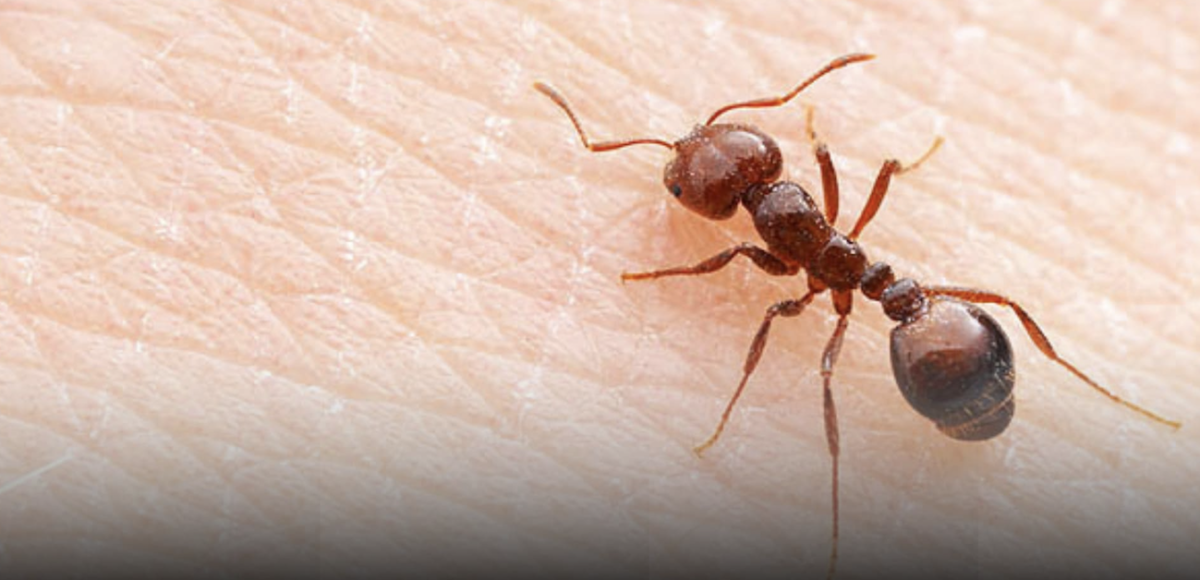
Five months after aerial fire-ant treatments were carried out in Toohey Forest, official eradication records show broad regional progress across Brisbane, though park-specific outcome data remains unpublished.
Signs at the Davey Street entrance alerted residents to the fire-ant response in April, with aerial treatment scheduled for 23 and 24 April. Brisbane South BUG reported that Brisbane City Council had advised drones would be used to distribute bait during the operation.
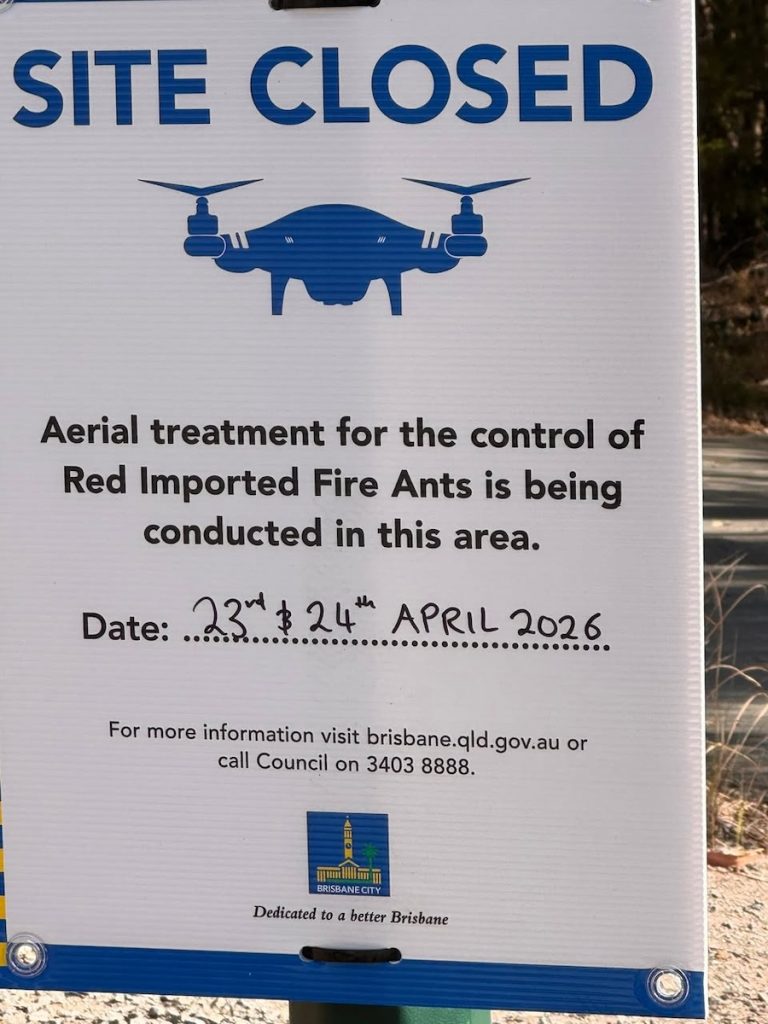
The National Fire Ant Eradication Program uses drones, helicopters and aeroplanes for properties larger than five hectares, while smaller sites can be treated with utility terrain vehicles or handheld spreaders.
Public map no longer shows a Toohey Forest marker
A current view of the National Fire Ant Eradication Program’s public detection map shows no confirmed detection marker over Toohey Forest as of September 2026.
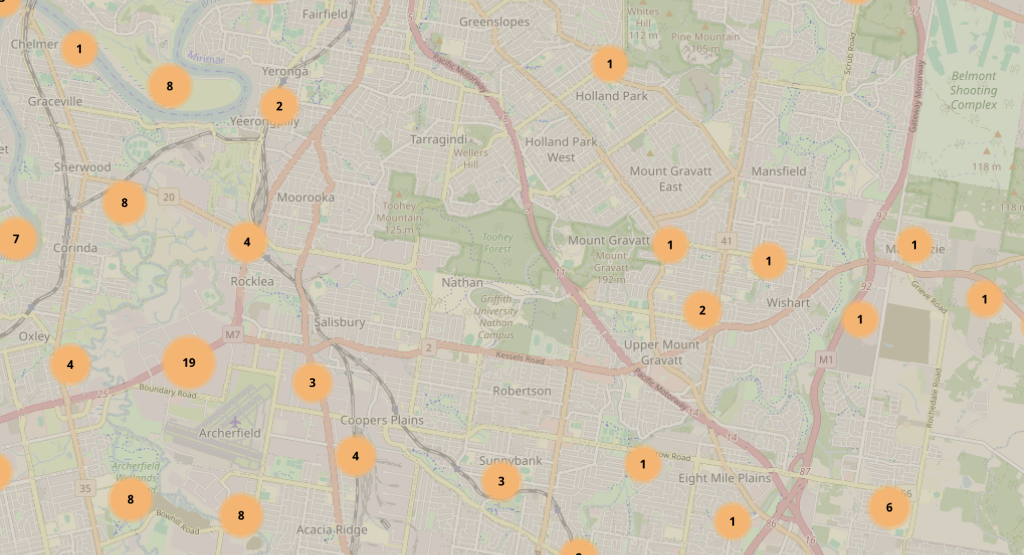
The map is updated daily with detections confirmed by the program. Confirmed infested locations remain visible for 12 months regardless of whether treatment has taken place, and each location can represent more than one nest. The map does not show total nest numbers or treatment outcomes.
Because the Toohey Forest treatment occurred only in April, the absence of a marker is notable, but it does not establish that the infestation has been eradicated.
Broader aerial treatment reports strong reductions
Statewide figures released in July show substantial reductions in some treated areas.
The Queensland Government said more than 185,000 hectares had received aerial treatment across seven local government areas, including Brisbane City. Fire ant populations had fallen by an average of 86 per cent in some of the most heavily infested areas covered by the suppression program.
An August update from the Invasive Species Council said fire ant numbers were falling sharply in treated areas and 208,000 hectares had recently moved from suppression towards active eradication. The group also said Queenslanders were checking for fire ants at 13 times the usual rate.
Broader South East Queensland results show aerial suppression reducing fire-ant numbers in some heavily infested areas. A comparable result for Toohey Forest has not appeared in the official updates reviewed.
Toohey Forest supports threatened wildlife
Griffith University’s 175-hectare Nathan campus forms the southern part of Toohey Forest and contains remnant native vegetation and several regional ecosystems.
University records list more than 500 native animal species at the campus, including endangered koalas and threatened species such as powerful owls, glossy black-cockatoos, grey-headed flying foxes and tusked frogs.
The forest and adjoining campus also provide public green space and tracks used for walking and cycling.
Published 15-Sept-2026