Did you know that Tarragindi was the former location of a field hospital during WW2? The Ekibin Hospital was used to treat shell-shocked soldiers during the Second World War and was also occupied by the 102nd Australian General Hospital which treated patients suffering from psychoneurotic disorders.
The Ekibin Hospital, built in 1943, was situated within the boundaries of Sexton Street and Toohey Road. The site grew to more than 90 structures by the end of 1944, with buildings occupying parts of Effingham, Fingal and Lutzow Streets and having a total capacity of about 1,250 beds.
155th Station Hospital
The 155th Station Hospital was a 500-bed hospital erected on 15 May 1941. It sailed to Australia on 19 May 1942, arriving in Sydney on 4 June 1942. In October of that year, the hospital moved to Camp Cable at Tamborine from Doomben Racecourse.
The 155th Station Hospital then moved to the Ekibin Hospital on 28 January 1944 and stayed there for a few months before transferring to Holland Park Hospital on 30 June 1944, taking over the space previously occupied by the 42nd General Hospital.
102nd Australian General Hospital
After the 155th Station Hospital moved out of the Ekibin Hospital, the Australian Army 102nd Australian General Hospital (102 AGH) took over in July 1944. By the end of 1945, 102 AGH had admitted almost 1,600 patients with psychiatric problems.
The 102nd Australian General Hospital then moved to Holland Park Hospital after the Americans vacated the site. Ekibin Hospital was later occupied by a British Naval Hospital.
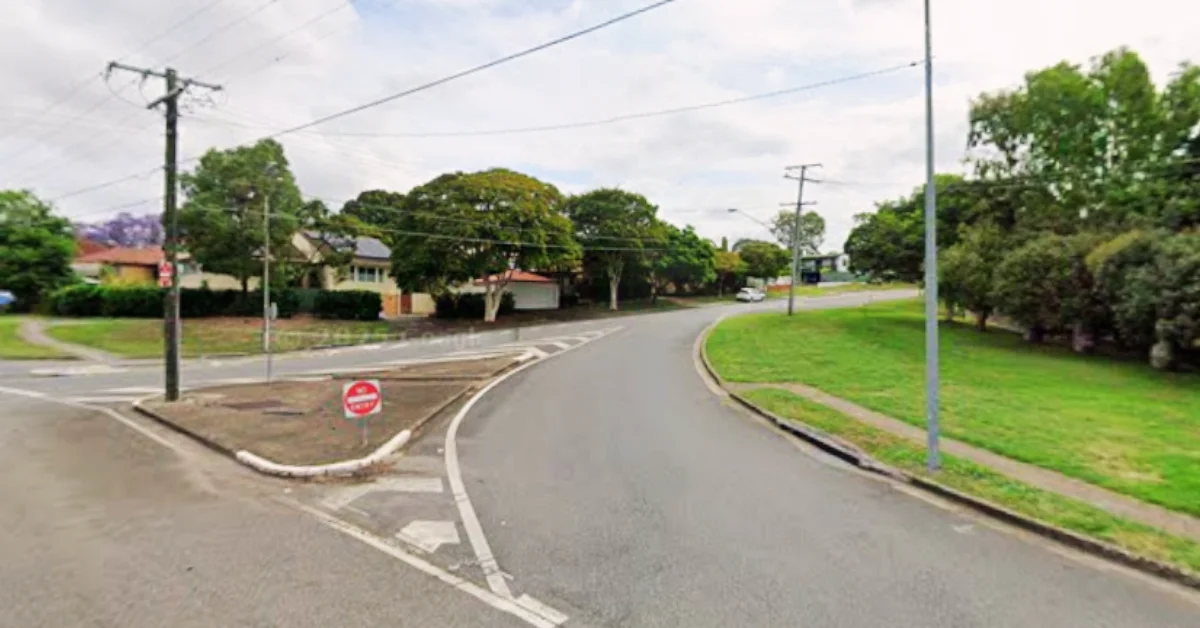
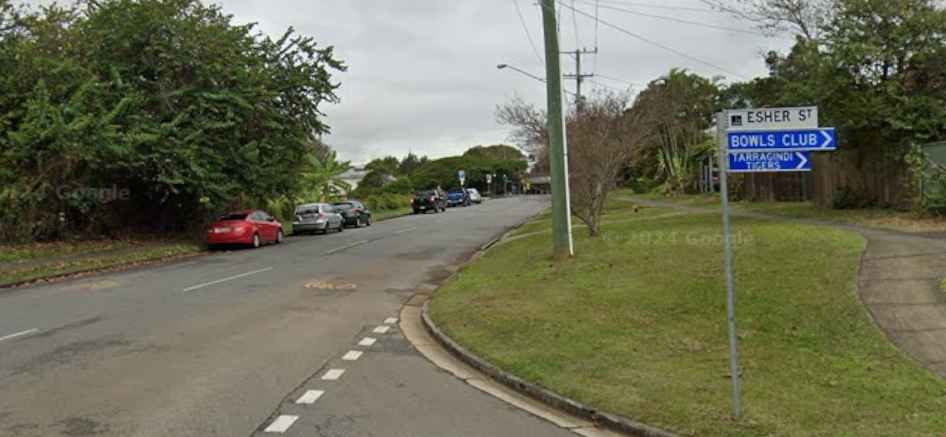
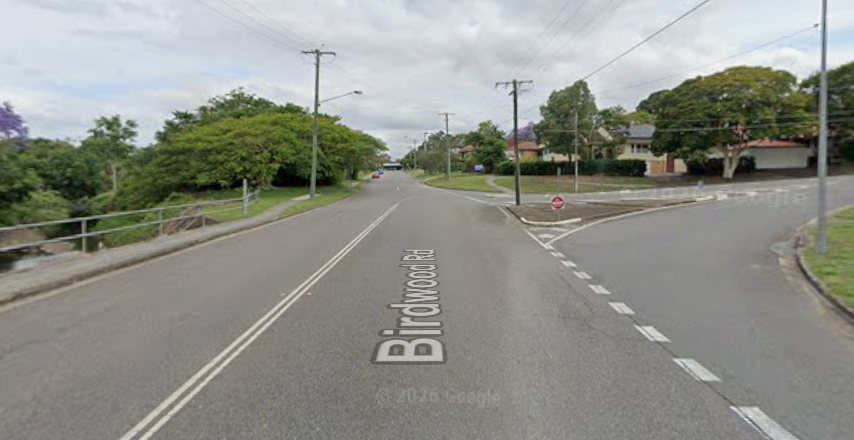
A petition calling for traffic lights at the intersection of Esher Street and Birdwood Road is gathering support, with residents urging Brisbane’s local officials to address what they describe as safety risks at the busy Tarragindi intersection.
The e-petition asks Brisbane to assess the safety risks at the unsignalised intersection, commit to installing traffic signals and publish a timeline for the works. Supporters said the request comes as upgrades are already underway at the nearby Esher Street and Toohey Road intersection, but argued the Birdwood Road junction should also be considered.
Residents Call for Action
Photo credit: Google Street View
According to the petition, severe traffic builds up at the intersection during peak periods. Residents say the congestion can leave motorists frustrated, leading some to fail to give way and contributing to frequent near misses.
The petition also highlighted the nearby shared cycle path, where cyclists merge onto Esher Street immediately beside the intersection. Supporters believe this creates an additional safety risk, particularly during busy periods when traffic is backed up.
Campaign organisers said the intersection is an important route for people travelling between Tarragindi and neighbouring Holland Park. In a community post encouraging people to sign the petition, they described the location as “a ticking time bomb” and argued that relying on luck to prevent a fatality is not an acceptable approach to road safety.
The group is asking Brisbane’s local officials to assess the immediate safety risks, install traffic signals to improve traffic flow and better protect cyclists, and provide the community with a clear timeline for any future works.
Nearby Upgrade
Photo credit: BCC
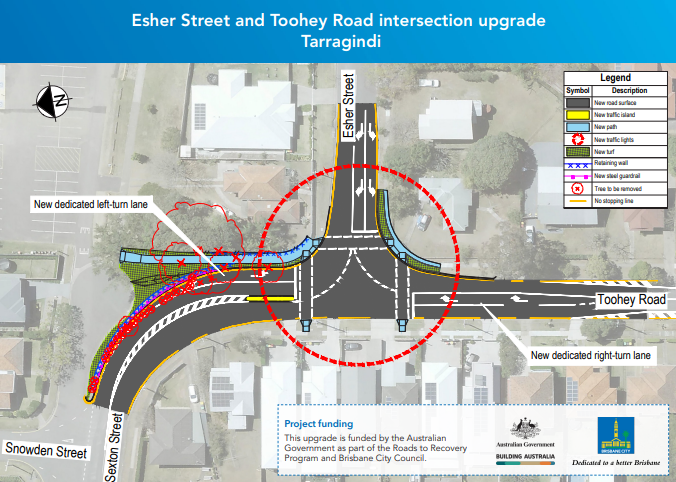
The campaign coincides with Brisbane’s upgrade of the nearby Esher Street and Toohey Road intersection.
According to Brisbane, motorists are “taking risks to navigate the intersection,” with the project designed to make the junction safer and easier to get through. The works include new traffic signals, pedestrian crossings, road widening and other improvements aimed at improving safety and traffic flow.
Petition supporters say those upgrades are welcome but believe the Esher Street and Birdwood Road intersection should also be assessed because they say it experiences significant congestion during peak periods.
Petition Seeks Safety Assessment
Photo credit: Google Street View
The petition asks Brisbane’s local officials to:
Assess the immediate safety risks at the Esher Street and Birdwood Road intersection.
Commit to installing traffic signals to improve traffic management and protect cyclists.
Publish a clear timeline for the proposed works.
The petition will remain open until Monday, 21 September 2026, before Brisbane considers the request through its e-petition process.
Supporters hope a strong response from residents in Tarragindi and Holland Park will encourage Brisbane to investigate the intersection and consider whether additional safety measures are needed.
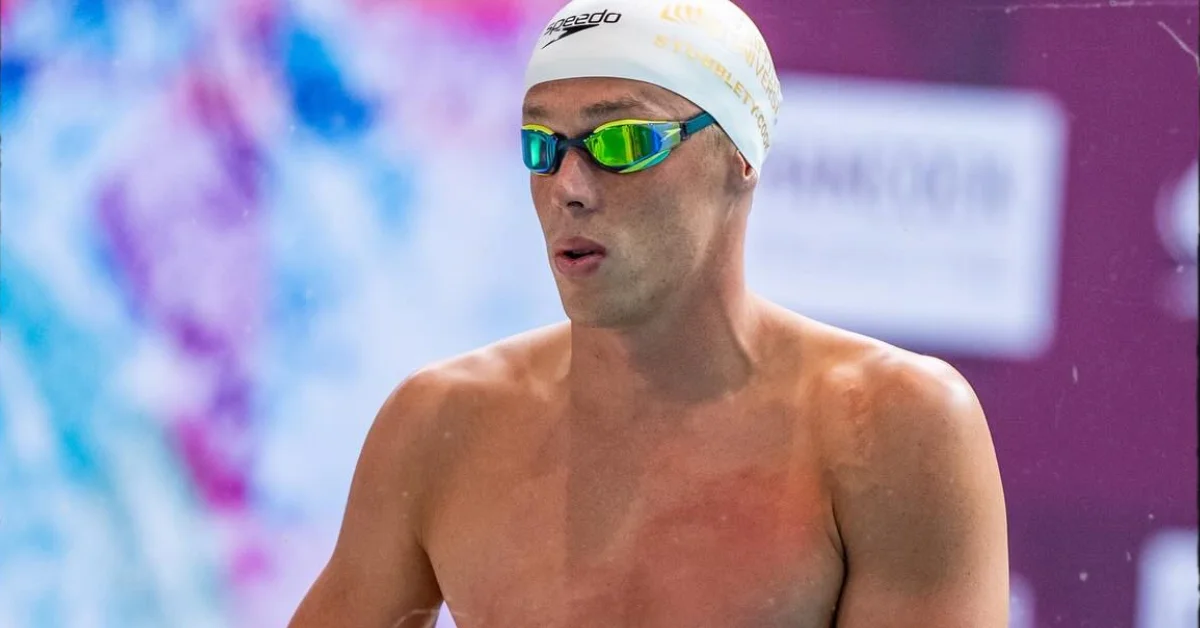
Zac Stubblety-Cook has marked his return to international racing with a fifth-place finish in the men’s 100m breaststroke final at the 2026 Commonwealth Games in Glasgow.
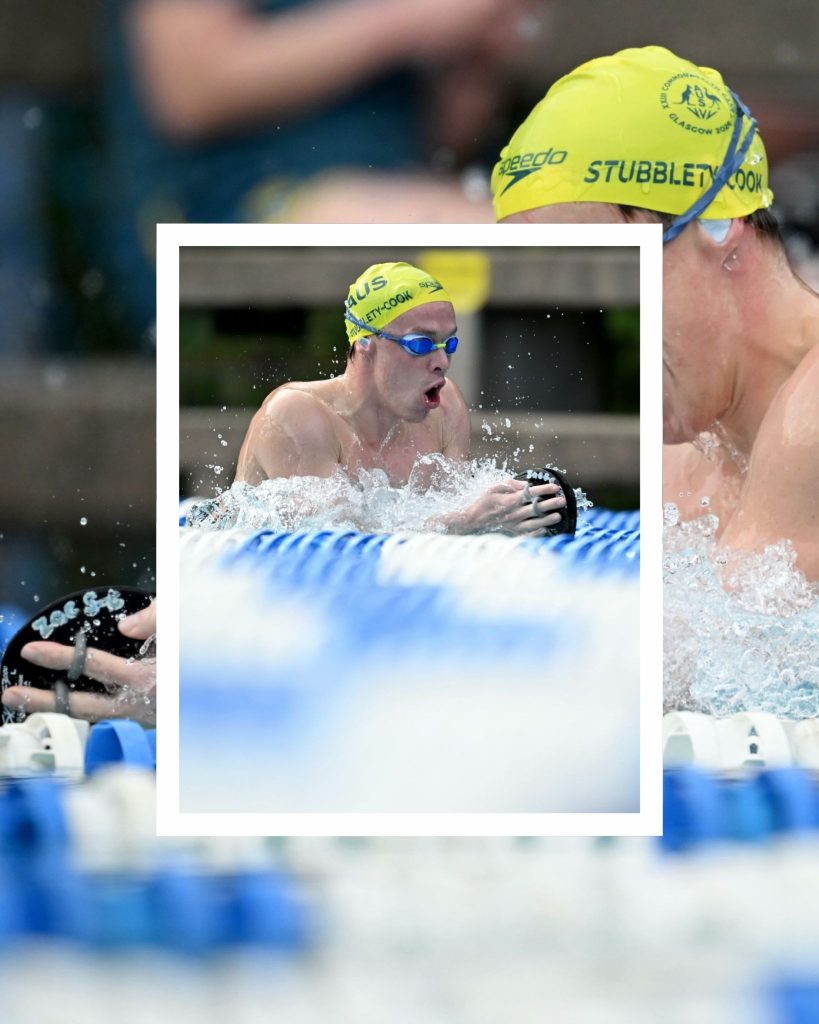
Competing in the opening session of the Games, Stubblety-Cook qualified fifth fastest overall for the men’s 100m breaststroke final after clocking 1:00.21 in the semi-finals. He returned for the final and finished fifth in 1:00.20, just one hundredth of a second quicker than his semi-final swim.
Photo credit: Instagram/Zac Stubblety-Cook
Long before Olympic medals and world titles, Stubblety-Cook began swimming with the Water Ratz at Wellers Hill State School in Tarragindi. He later progressed through the ranks to become one of Australia’s leading breaststroke swimmers and now trains with Melbourne’s Nunawading Swimming Club.
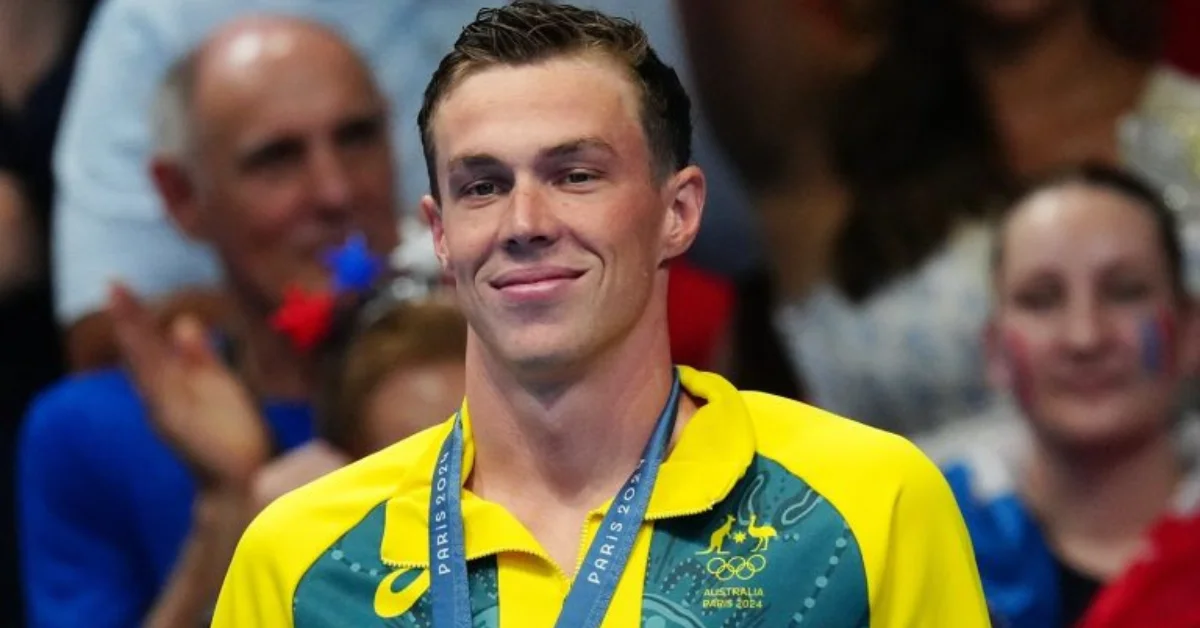
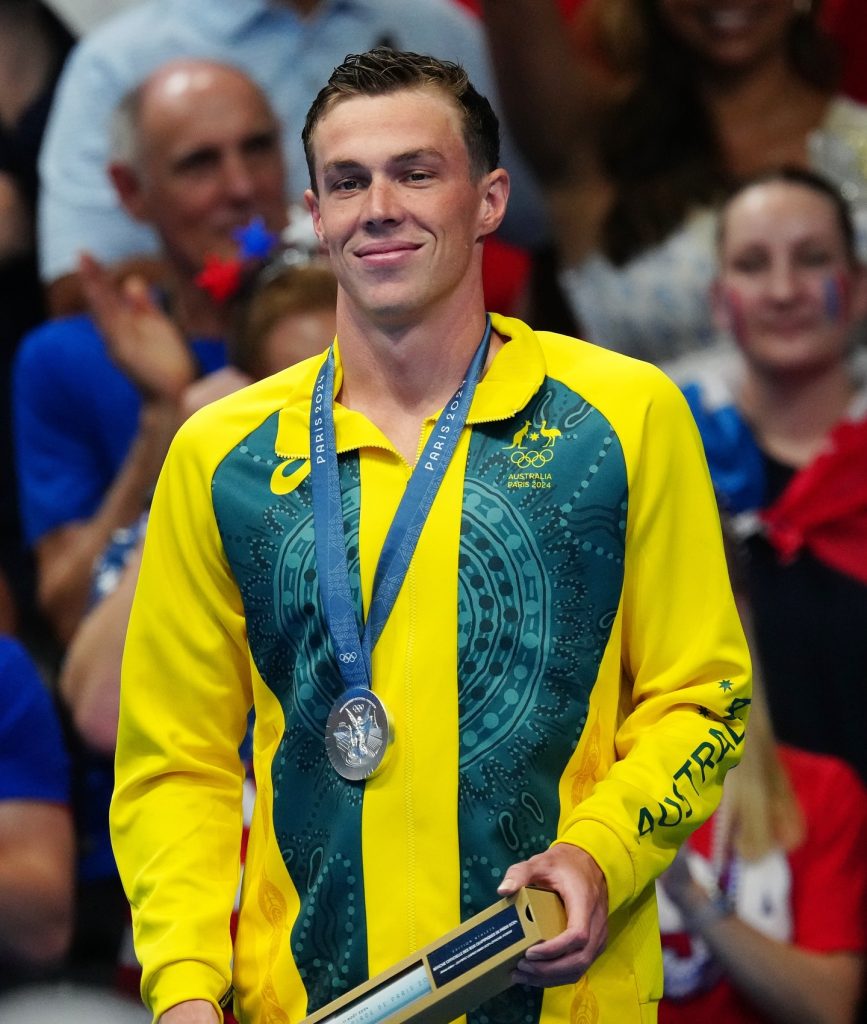
The Glasgow campaign marks another milestone in the 27-year-old’s return to international competition. Stubblety-Cook won Olympic gold in the 200m breaststroke at the Tokyo Olympics, added Commonwealth Games gold in Birmingham in 2022, and claimed silver in the event at the Paris 2024 Olympics.
Fellow Australian Sam Williamson claimed the gold medal in 59.17, producing a blistering final 50 metres to complete a remarkable comeback after recovering from a knee injury that at one stage left him learning to walk again.
After the final, Stubblety-Cook reflected on his performance in an Instagram post.
“Left wanting more, executing the best race plan I could. Stoked to be back racing internationally again,” he wrote.
He also praised Williamson’s achievement, writing: “Super proud of @sam_likesjam for accomplishing all he has over the last 12 months and it’s only the beginning.”
Williamson’s victory was one of the standout stories of the swimming program after the breaststroker fought back from a serious knee injury that forced him to learn to walk again before returning to elite competition.
Australia’s Dolphins continued their impressive campaign in Glasgow with another dominant night in the pool, collecting five gold medals and a Games record.
Williamson’s breaststroke triumph was among the highlights as Australia continued to build momentum in the swimming competition, with Stubblety-Cook’s return to an international final providing another positive sign ahead of the remainder of the season.
For Stubblety-Cook, the result may not have delivered a medal, but reaching another international final after his time away from top-level competition represented another important step forward in his comeback.
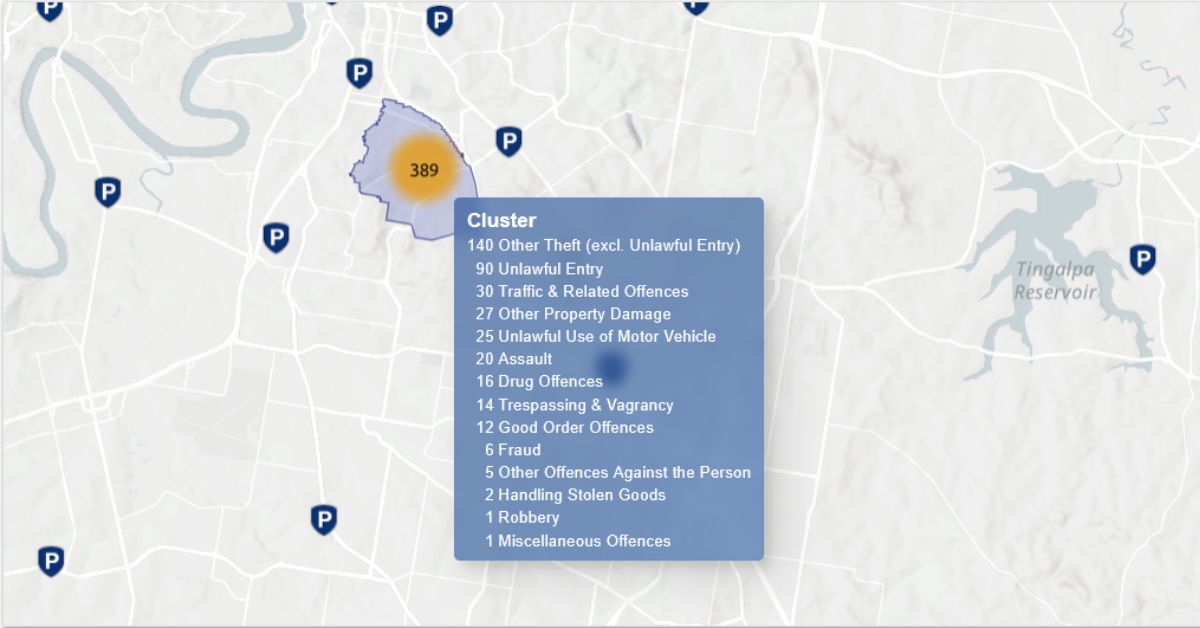
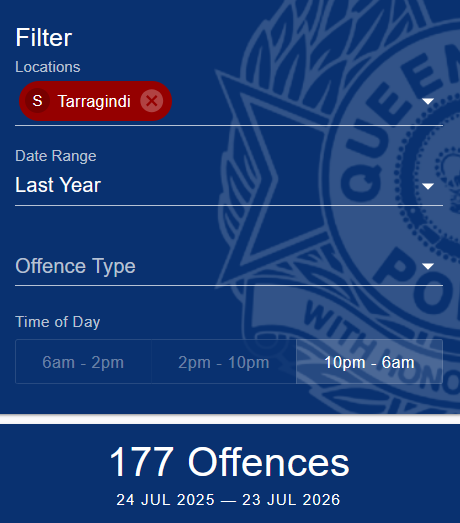
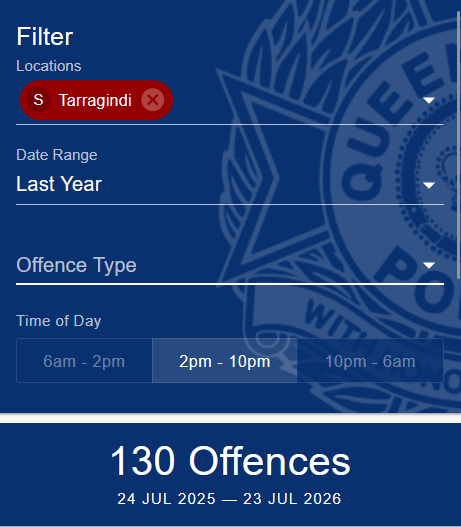
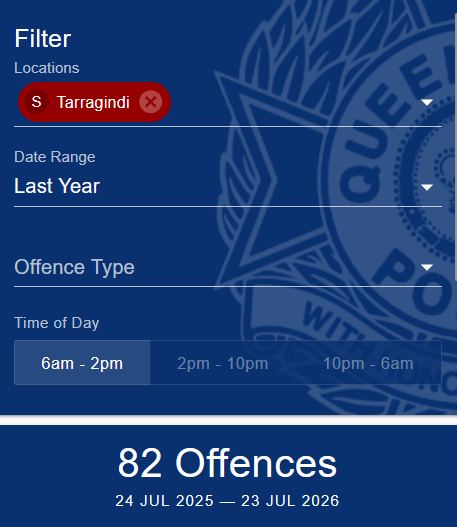
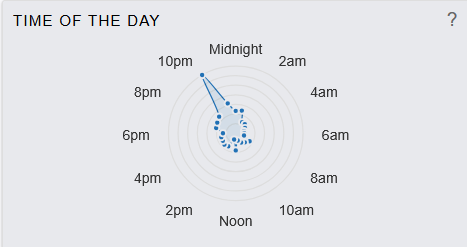
The timing of the offences shows a clear pattern. The largest share, 177 offences, occurred between 10pm and 6am. There were 130 offences between 2pm and 10pm, while 82 offences were recorded between 6am and 2pm.
The hourly chart shows a clear late-night peak, with offences concentrated after dark.
Monthly and weekly patterns in the suburb
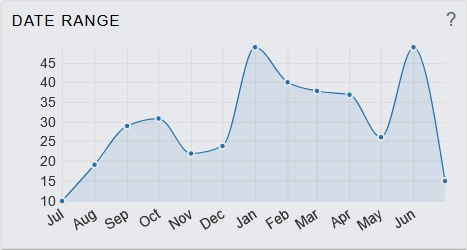
The figures also show monthly variation across the year. Offence numbers rose in January and again in June, while July and August were lower by comparison.
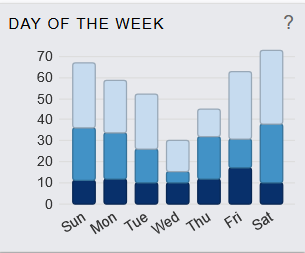
The day-of-week chart shows uneven activity across the week. Saturday appears to record the highest total, with Friday and Sunday also higher than the quieter midweek days. Wednesday appears to be the quietest day in the chart.
Taken together, the figures show that reported offences in Tarragindi were not spread evenly across the year, week or day.
Crime Stoppers warns of money traps
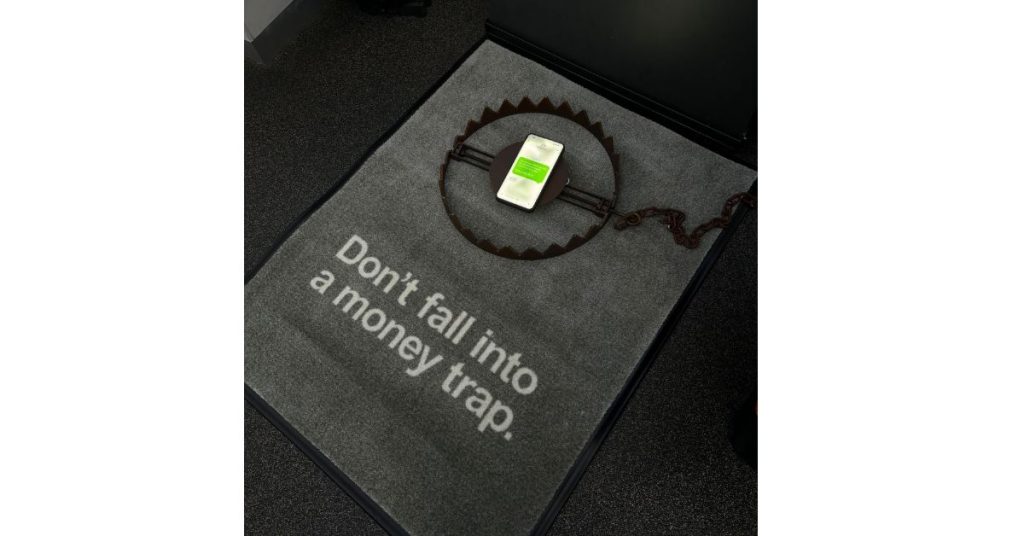
The Tarragindi figures come as Crime Stoppers Queensland is warning people about so-called money traps linked to organised crime.
In a media release dated 23 July 2026, Crime Stoppers Queensland said criminal networks are using fake job offers, social media messages and promises of easy money to recruit people into moving criminal funds.
The warning is aimed particularly at international students and temporary visa holders, but Crime Stoppers says the risk applies to everyone.
Photo Credit: Crime Stoppers Queensland
The key warning signs include unsolicited job offers promising easy money, requests to receive or transfer money through a personal bank account, requests to share banking details or allow someone else to use an account, and pressure to act quickly or keep financial arrangements secret.
Crime Stoppers Queensland CEO David Hansen said awareness is the strongest defence.
“Organised crime is increasingly using sophisticated tactics to lure ordinary people into what appear to be legitimate opportunities,” Mr Hansen said.
“Whether it’s a message on social media, an online job advertisement or someone asking to use your bank account, if it seems too good to be true, it probably is.”
Staying alert in Tarragindi
For Tarragindi residents, the message is simple: pause, check the facts and report anything unusual.
Crime Stoppers says anyone with information about suspicious criminal activity can report it safely and anonymously. The organisation also says talking about the warning signs with family and friends can help stop organised crime before it spreads.
For more information or to report suspicious activity anonymously, visit crimestoppersqld.com.au or call 1800 333 000.
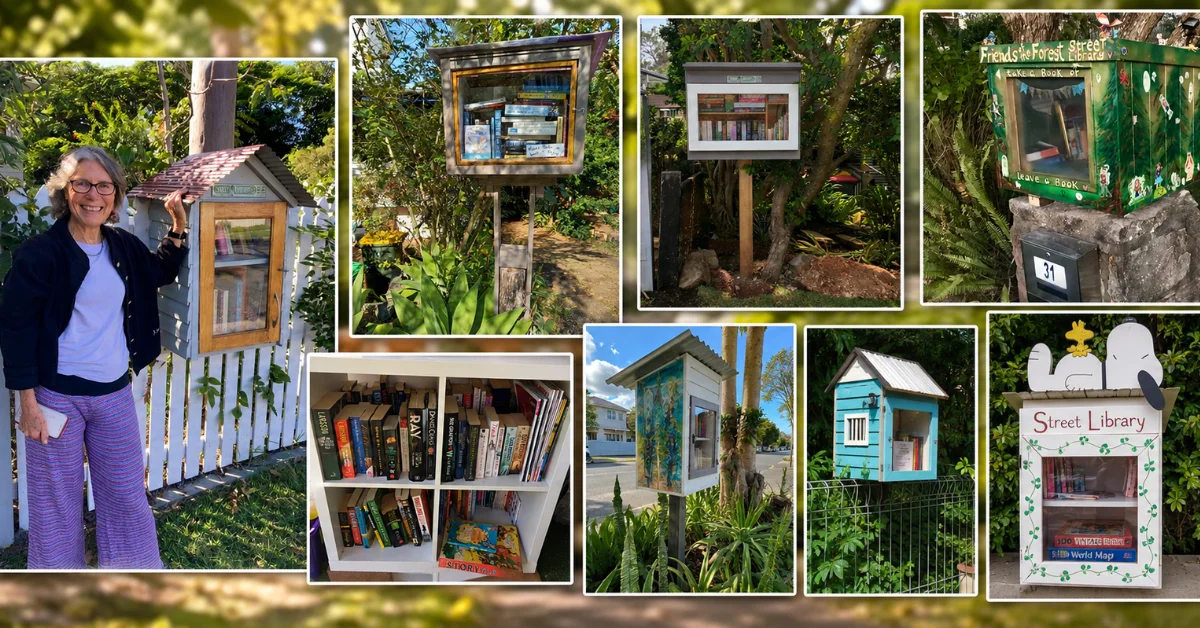
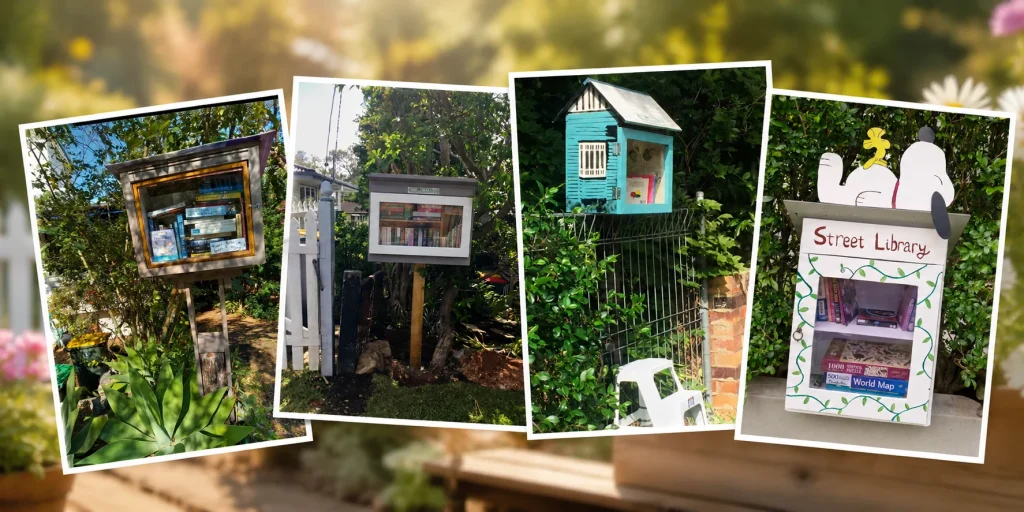
Selected Tarragindi street libraries place books beside bus stops, pedestrian routes, a playground and forest surroundings, linking book exchanges with everyday neighbourhood travel.
Street libraries allow people to take books without checking them in or out. A reader may return a title through the wider network, pass it to a friend or leave another book for someone else.
The Tarragindi listings are examples rather than a complete account of every street library available in and around the suburb.
Tarragindi Street Libraries On Everyday Routes
Stop 34 Library is positioned for people waiting for a bus or passing while walking a dog. Its collection is intended to include something for almost everyone.
The Blue House Street Library is also located at a bus stop, with a post box nearby. A small step helps visitors see what has been added or place a book inside.
Beagle Books on Bramston occupies a cul-de-sac used by pedestrian commuters. Visitors are directed to look for Snoopy, while the exchange carries books, puzzles and games for different ages and interests.
Together, the locations place reading material where residents may already pause or pass during ordinary trips through the neighbourhood.
Photos taken from Street Library.
Books Beside Parks And Forest
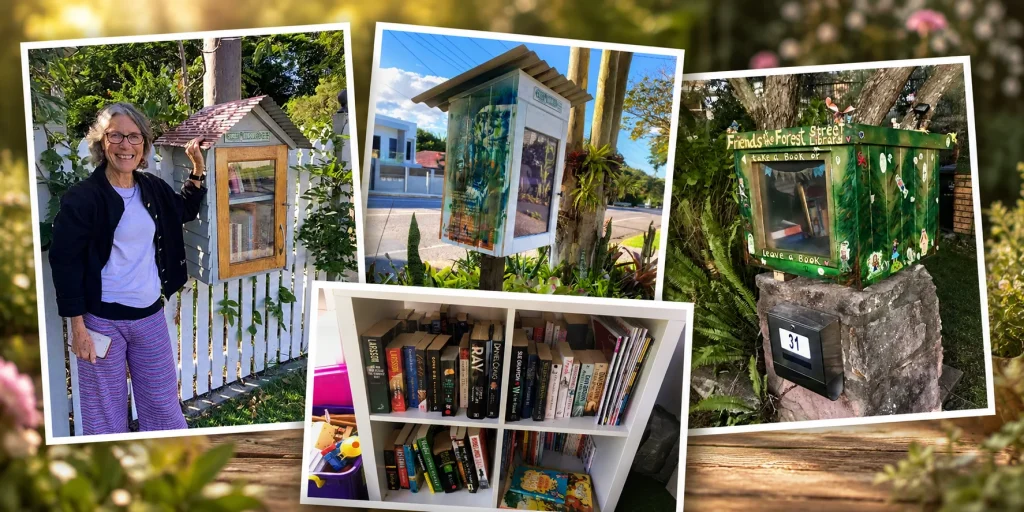
Friends of the Forest encourages visitors to take a book into the forest nearby, listen to the birds and spend time in the natural surroundings. It also operates as a straightforward place to take or leave books.
Just one ‘Moor’ Chapter is situated on a street near a park with a playground. Its collection is open to younger and older book enthusiasts who want to share, swap or exchange stories.
Cracknell Road Estate Street Library is located on high land with attractive surroundings, adding another outdoor setting among the listings around Tarragindi.
Tarragindi Free Library provides a free way for local residents to borrow and exchange books with one another.
Alcove on Alcorn carries books for children and adults, with quality presented as its main selection standard. Pinzothek also caters for both age groups through a rotating range covering varied subjects.
Weal Street Library follows a simple take, leave and share approach. Blackbery Street Library carries fiction, non-fiction, young adult books and children’s titles, including classics and newer editions.
Street Library Australia maps registered libraries across the country. Readers can search an address, adjust the radius from five to 50 kilometres and view individual locations and photographs where available.
For much of the past decade, Zac Stubblety-Cook has been one of Australia’s leading swimmers, consistently representing the green and gold on the sport’s biggest stages. The Brisbane-born Olympic, world and Commonwealth champion will continue that journey after being selected in the Dolphins squad for the 2026 Commonwealth Games in Glasgow.
Now 27, Stubblety-Cook heads to Scotland as one of the experienced members of a 60-strong Australian swimming team that blends established champions with emerging talent. The squad will compete from 23 July to 2 August, with the swimming program taking place at Tollcross International Swimming Centre.
His latest selection adds another chapter to a career that has already delivered Olympic, world and Commonwealth titles in the 200m breaststroke. Between 2021 and 2022, Stubblety-Cook became Olympic champion, world champion and Commonwealth Games champion in his signature event, while also setting a world record.
Photo credit: Instagram/Zac Stubblety-Cook
For the Wellers Hill Water Ratz community in Tarragindi, where Stubblety-Cook first learned to swim, his continued presence on the Australian team is a reminder that international success can grow from local beginnings.
A Career Almost Cut Short
Long before becoming one of Australia’s most decorated breaststrokers, Stubblety-Cook faced a significant obstacle that cast doubt over whether he would continue in the sport.
In 2015, after being selected for the Junior Olympic Cup in Tokyo, doctors discovered a golf ball-sized tumour in his left shoulder. The diagnosis required surgery followed by about six months of rehabilitation, interrupting his development at a critical stage of his career.
The uncertainty surrounding his recovery left Stubblety-Cook unsure whether he would swim competitively again. After completing his rehabilitation, he returned to competition and earned selection for the 2017 World Junior Championships.
His comeback gathered momentum over the following years. He made his Commonwealth Games debut on the Gold Coast in 2018 before also representing Australia at the Pan Pacific Championships and the 2019 World Championships. His progress continued over the following years, culminating in Olympic, world and Commonwealth titles in the 200m breaststroke.
At the Birmingham 2022 Commonwealth Games, Stubblety-Cook won gold in the 200m breaststroke and added a silver medal in the medley relay, further cementing his place among Australia’s elite swimmers.
Dolphins Set for Glasgow
Commonwealth Games Australia has named 42 swimmers alongside the nation’s Para swimmers to form the Dolphins squad for Glasgow.
The Australian team includes some of the country’s biggest names, including Kaylee McKeown, Kyle Chalmers, Cameron McEvoy, Mollie O’Callaghan, Sam Short, Lani Pallister, Tim Hodge and Lakeisha Patterson. The squad also features a strong group of debutants, reflecting the balance of experienced performers and emerging athletes selected for the Games.
Among the selections is Sam Williamson, who returns after recovering from a ruptured patella tendon that required surgery, while 14-year-old Para swimmer Mia Hogan will become the youngest member of Australia’s Glasgow swimming team.
Australia will be aiming to improve on the Dolphins’ haul of 25 gold medals from the Birmingham Commonwealth Games. Glasgow 2026 will also feature the largest swimming program in Commonwealth Games history, with the addition of the women’s 1500m freestyle and men’s 800m freestyle events.
Research from Griffith University’s Nathan campus has raised fresh questions about Brisbane’s ability to deliver the higher-density housing needed to accommodate future population growth.
The study found that almost half of the city’s land zoned for apartments and townhouses is too small to support those developments, despite planning changes designed to encourage more homes in established suburbs.
Griffith Study Tests Brisbane’s Housing Strategy
Dr Rachel Gallagher, from Griffith University’s Department of Tourism and Marketing, analysed Brisbane’s zoning alongside land parcel data to assess how much of the city’s upzoned land could realistically be redeveloped.
Her research found that Brisbane’s typical residential block is around 400 square metres, while developments containing multiple dwellings generally require sites of at least 600 square metres.
Only 51.2 per cent of land currently zoned for multiple dwellings met that minimum size.
Dr Gallagher said many property owners would need to combine adjoining blocks through land assembly before redevelopment became possible, but noted the process was difficult, slow and relatively uncommon.
Challenge for Future Housing Supply
The findings come as Brisbane prepares to accommodate significant population growth over the next two decades.
Under the Queensland Government’s South East Queensland Regional Plan, Brisbane is expected to provide more than 210,000 new homes by 2046, with nearly 90 per cent intended to be delivered as higher-density housing within existing suburbs.
While upzoning has been promoted as a way to unlock more housing, the Griffith research suggests many sites may never be able to take advantage of the new planning rules because of their physical size.
Looking Beyond Planning Maps
The study found that lot size was only one hurdle facing redevelopment. Character protections, vehicle access and parking requirements could further limit opportunities in Brisbane’s established suburbs.
Dr Gallagher said previous research showed higher-density projects were most successful on larger sites, in areas already planned for increased density and supported by appropriate infrastructure. Many newly upzoned locations did not meet those conditions.
She also cautioned that rezoning land in areas with weaker housing demand may inflate land values without increasing the number of homes built, while restrictive zoning continued to constrain redevelopment in suburbs where demand remained high.
Dr Gallagher said planning policies needed to better reflect the physical realities of individual sites, arguing that land characteristics ultimately determine whether higher-density housing can be delivered.
The research has been published in the journal Urban Policy and Research under the title Misaligned Policy and Practice: Does Upzoning’s Implicit Reliance on Land Assembly Undermine Densification Goals?
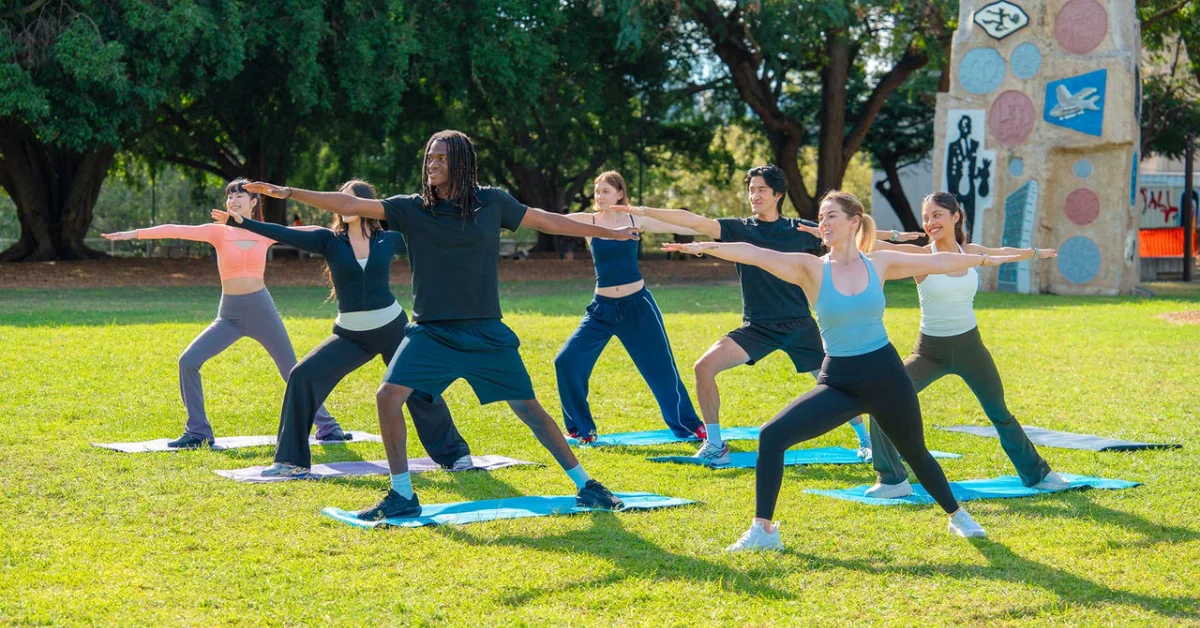
Move Well Brisbane will expand free and low-cost health and wellness activities across the city, with Tarragindi already offering active sessions at Shaftesbury Street Park.
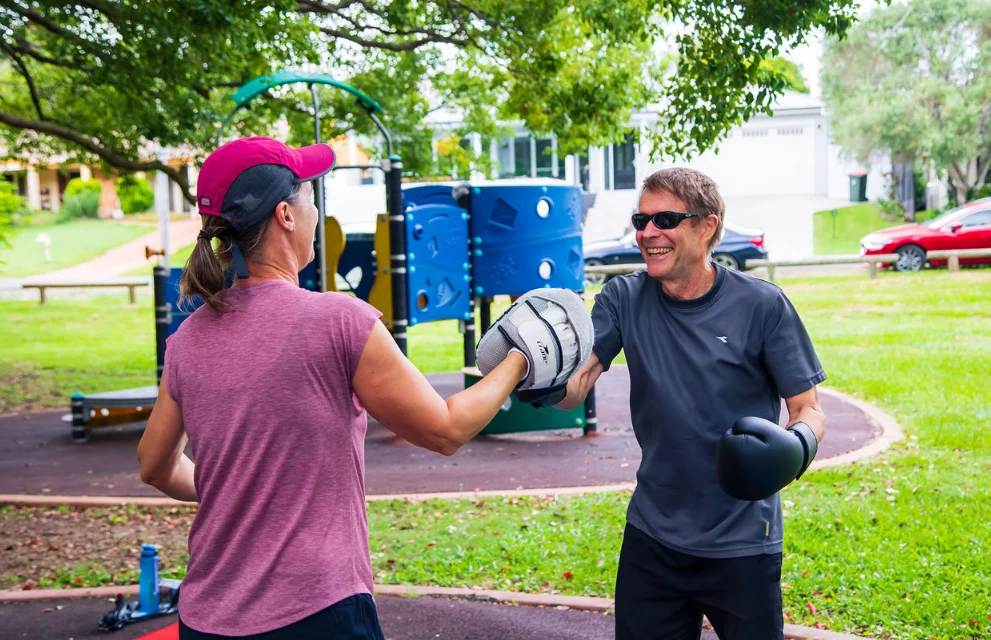
The program is the next stage of Active and Healthy, which already offers free and low-cost activities across Brisbane. Existing activities include fitness and strength classes, aqua sessions, yoga, movement activities, Zumba, dance, children’s programs, school holiday sessions and activities for older residents.
Move Well Brisbane is expected to launch in late 2026, supported by a $5.6 million allocation in the 2026/2027 budget. The program will introduce more whole-body wellness activities and increase the number of sessions available across a wider range of times and locations throughout the city.
The number of sessions is set to more than double to 20,000 over two years. The number of participating providers is also expected to rise to 400.
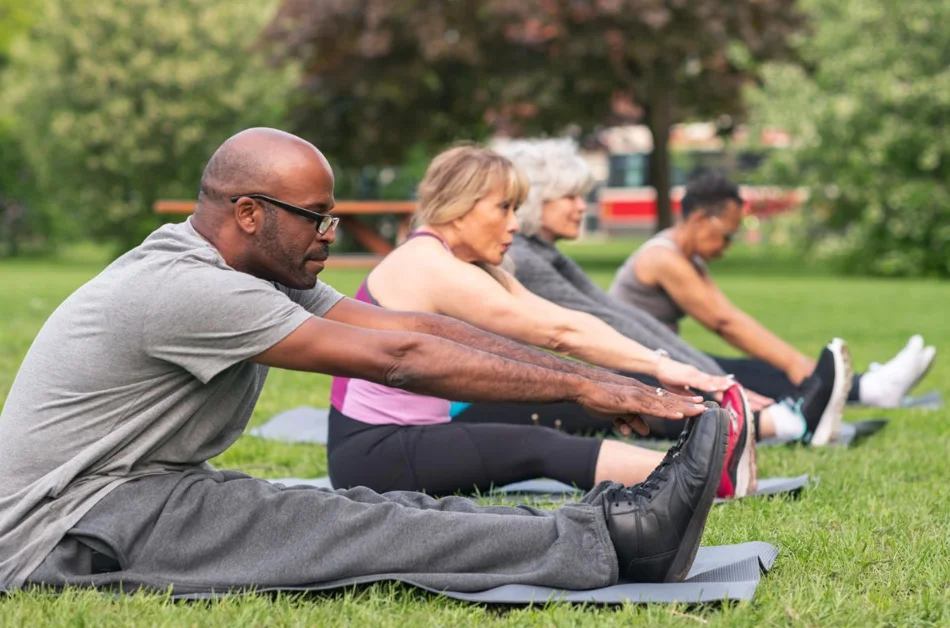
At present, about 9,000 Active and Healthy sessions are delivered each year across 218 Brisbane locations. Existing programs include Chillout activities for children up to 17 years old and GOLD activities for residents aged over 50.
The expanded program will also add nutrition and cooking classes alongside existing movement-based activities such as yoga and Pilates. Nutrition Australia Queensland will help deliver food and cooking sessions focused on practical, nutritious and budget-friendly meals and snacks.
Photo Credit: BCC
Tarragindi Activities Already Listed
Shaftesbury Street Park in Tarragindi is already listed as a local venue for Active and Healthy activities, with upcoming sessions including orienteering and yoga.
An orienteering night navigation session is scheduled at the park on Tue 28 Jul from 5:45pm to 7:15pm. The activity is open to all ages and costs $6, or $12 per family.
Participants will use a prepared map to navigate through nearby parks and outdoor areas. They can complete the activity at their own pace, either alone or with others. Children under 14 must be accompanied by an adult.
Bookings are not required. Participants need to bring a torch or headlamp, with the meeting point near the junction of Laura and Gilmore Streets.
A free yoga session is also scheduled at Shaftesbury Street Park on Fri 26 June from 9:00am to 10:00am. It is open to all ages and no bookings are required.
The session includes breathing, stretching, balance and strength movements, with standing poses and mat-based exercises included. Participants are asked to bring an exercise mat, towel, two blocks and a yoga strap if they have them.
The meeting point for yoga is off Laura Street. Both Tarragindi activities are listed at Shaftesbury Street Park, 59 Shaftesbury Street.
Move Well Brisbane will broaden the range of activities available across the existing active and healthy program.
Expressions of interest are being sought from providers for activities including nutritious cooking classes, group fitness, boxing, Pilates, dance, kayaking, stand-up paddle boarding, aqua aerobics, rock climbing, skating, scooter activities, group sports and weekend programs.
Photo Credit: BCC
The wider program covers different ages, abilities and experience levels. It includes activities for adults, children and families, along with sessions for older residents and school holiday programs where older residents and young people can take part together.
For Tarragindi, the listed activities at Shaftesbury Street Park provide local examples of the type of active and wellbeing sessions already available before the broader Move Well Brisbane rollout.
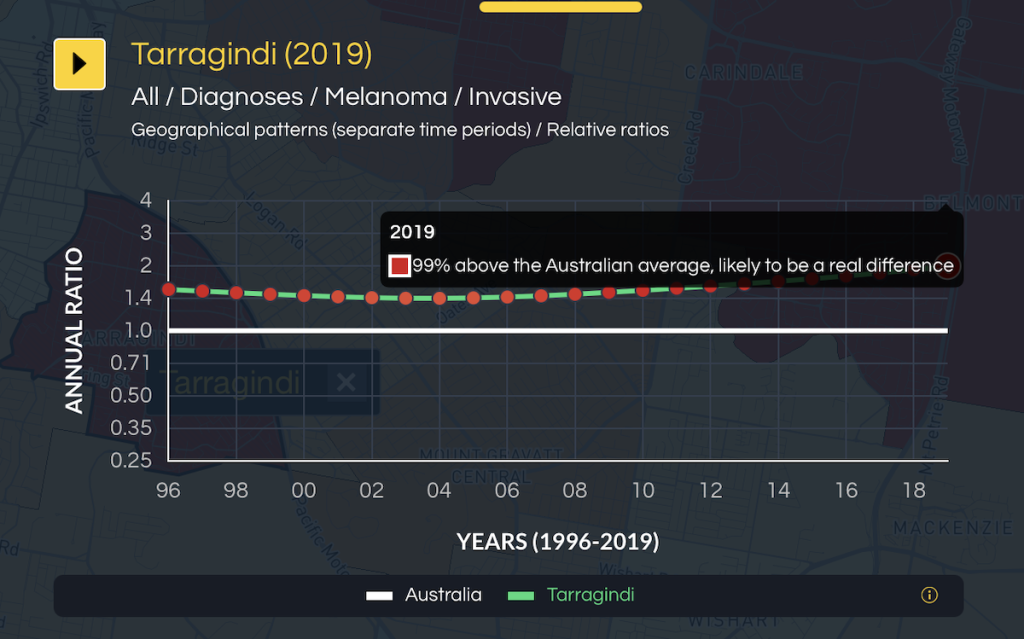
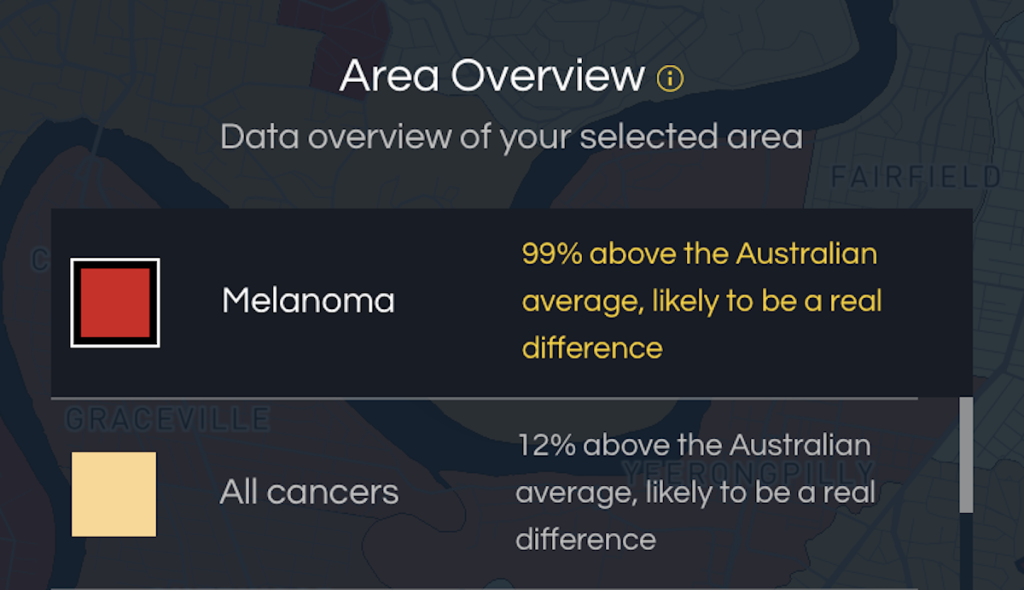
A major Australian study has identified dozens of new genetic regions linked to mole development, a breakthrough that could eventually improve melanoma screening and treatment for people at higher risk of the disease. The findings may be particularly relevant for communities such as Tarragindi, where Australian Cancer Atlas data shows melanoma diagnosis rates are almost double the national average.
Researchers from QIMR Berghofer Medical Research Institute in Brisbane led the world’s largest genetic study into what determines how many moles a person develops. Published in Nature Communications, the research analysed genetic data from 85,965 people and identified 24 previously unknown genetic regions associated with mole count.
Scientists say the work provides important new clues about melanoma, Australia’s deadliest form of skin cancer.
Scientists Turn Attention to the Genetics Behind Mole Growth
Researchers have long known that people with large numbers of moles face a greater risk of developing melanoma. However, much less has been understood about the genes that influence why some people develop more moles than others.
The QIMR Berghofer team set out to answer that question by examining DNA data collected through 14 large international studies.
Lead author Shanika Jayasinghe and senior author Associate Professor Matthew Law found 29 genetic regions associated with mole count, including 24 that had not previously been identified in studies focused specifically on moles.
The researchers also identified more than 250 genes that may influence mole development and melanoma risk, providing new avenues for future investigation.
Photo Credit: Supplied
Moles and Melanoma Share the Same Cellular Origin
The study highlights the close biological relationship between moles and melanoma.
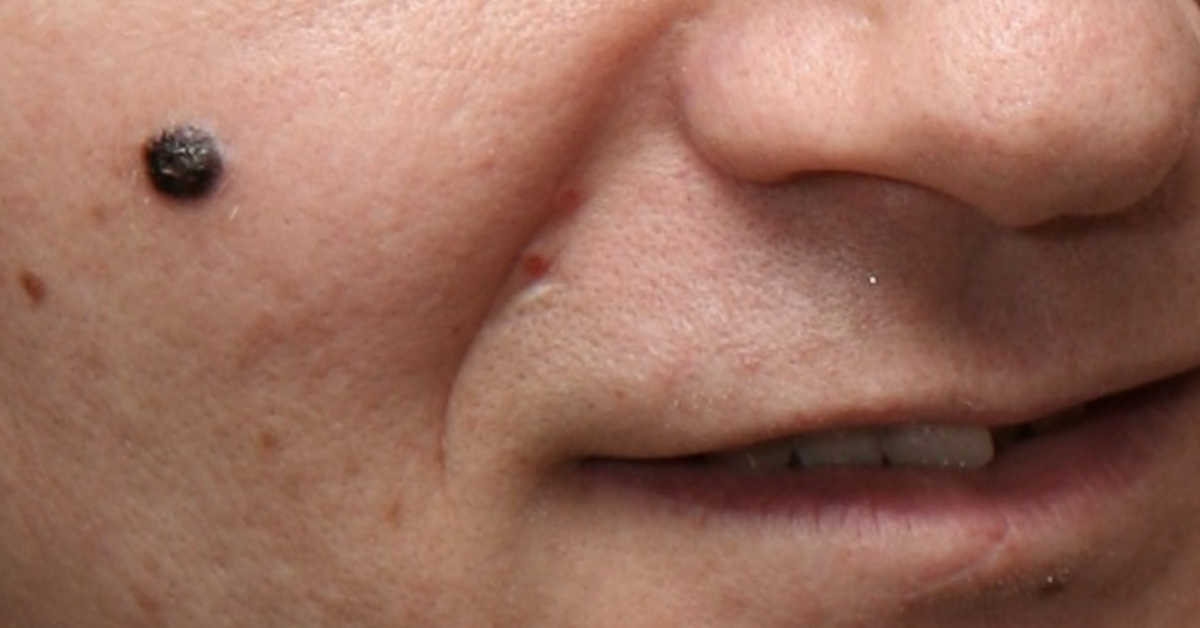
Both develop from pigment-producing skin cells known as melanocytes. A mole forms when melanocytes multiply and then stop growing. Melanoma develops when those cells continue to grow uncontrollably and become cancerous.
Researchers found that nearly all of the genetic regions associated with mole count also played a role in melanoma development.
Their analysis showed that people with a genetic tendency to develop more moles also carry a higher inherited risk of melanoma, reinforcing the connection between the two conditions.
Tarragindi Records One of the Highest Melanoma Rates in the Region
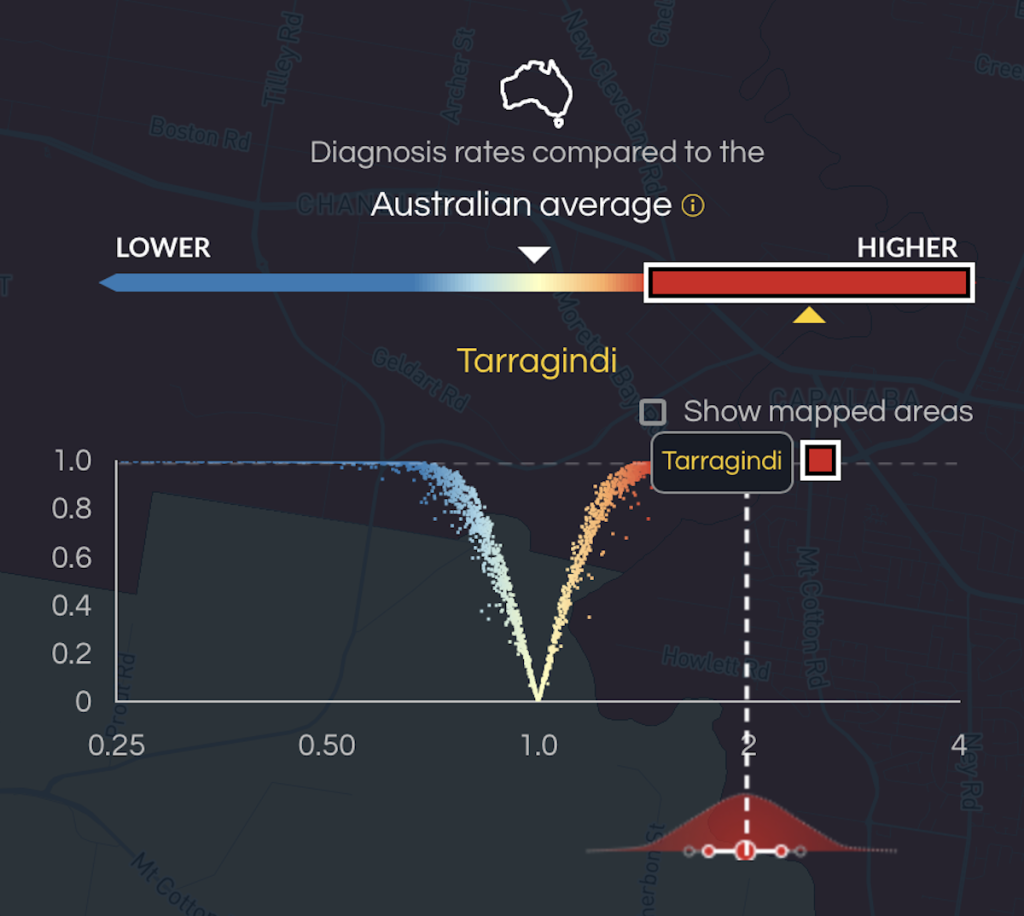
The findings carry particular significance for Tarragindi, where Australian Cancer Atlas data shows melanoma diagnosis rates were 99 per cent above the Australian average in the latest available figures.
The Atlas classified the difference as likely to be a genuine variation rather than a statistical anomaly.
Historical data also shows the suburb’s melanoma rates remained consistently elevated between 1996 and 2019, tracking well above the national average throughout the period.
While the Atlas does not identify the causes behind the higher incidence, researchers acknowledge that both environmental exposure and inherited genetic factors contribute to melanoma risk.
Discovery Could Lead to More Accurate Risk Assessment
One of the newly identified genes highlighted by the researchers is SIKE1, which is involved in regulating immune responses.
Scientists believe the gene may influence the body’s ability to detect and control abnormal melanocyte growth. Further studies will be needed to determine whether the pathway could eventually be targeted through future therapies.
The team also developed a Polygenic Risk Score designed to estimate a person’s inherited tendency to develop large numbers of moles.
Although still in the research phase, genetic risk scores may one day help doctors identify people who face a greater likelihood of developing melanoma and would benefit from more frequent skin checks and monitoring.
Early Detection Still Plays a Vital Role
Researchers emphasise that genetic discoveries do not replace the importance of sun protection and early detection.
Melanoma continues to claim around 1,400 Australian lives each year despite significant advances in treatment.
Regular skin examinations, the use of sunscreen, protective clothing and limiting exposure to ultraviolet radiation remain among the most effective ways to reduce the impact of the disease.
For suburbs such as Tarragindi, where melanoma rates remain substantially above the national average, the latest research offers hope that future screening programs may become more precise and better targeted towards those most at risk.
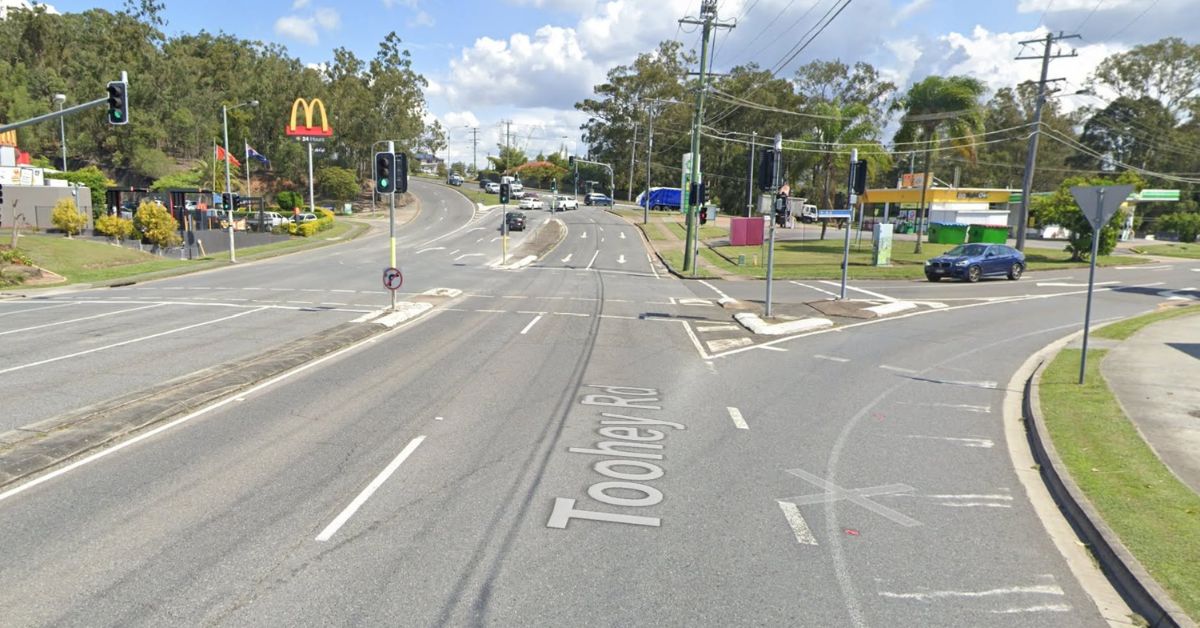
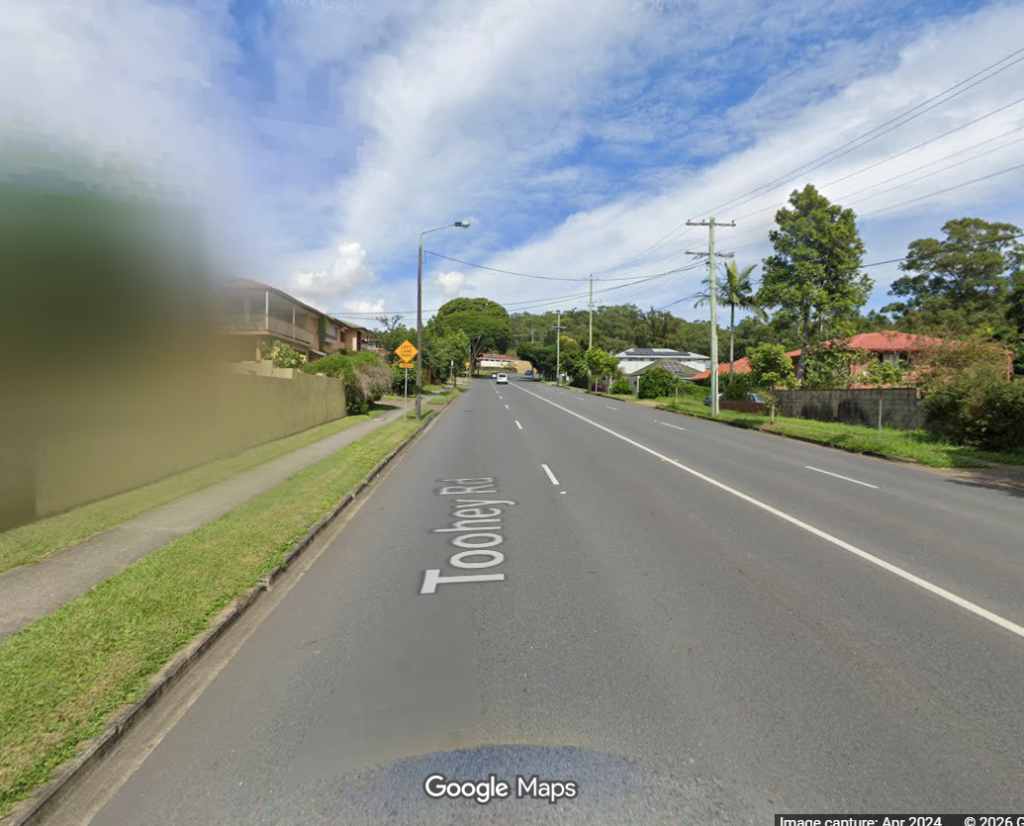
Toohey Road in Salisbury is among the roads included in a $110 million resurfacing program covering almost a million square metres of road surface across Brisbane, with the works branded “Operation Smooth” forming part of a broader $1.9 billion transport and infrastructure package for the coming year.
For Tarragindi and Salisbury residents, the resurfacing arrives on a road that has already seen significant recent investment of a different kind, just metres from where koalas and other wildlife now cross safely beneath the bitumen.
A road that runs through Toohey Forest
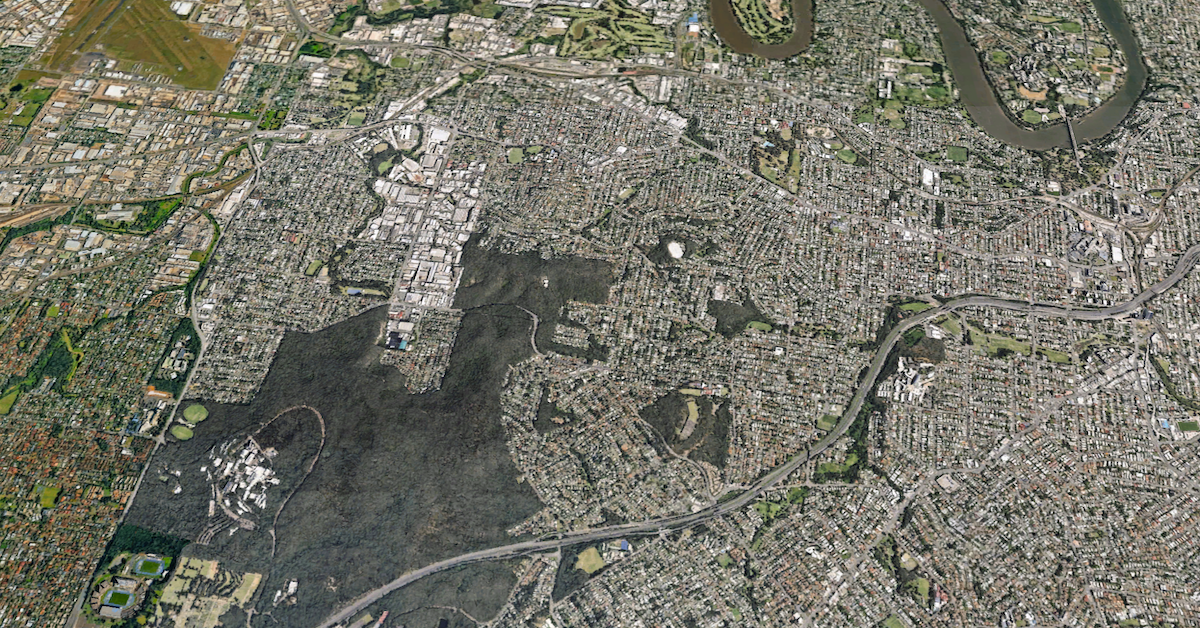
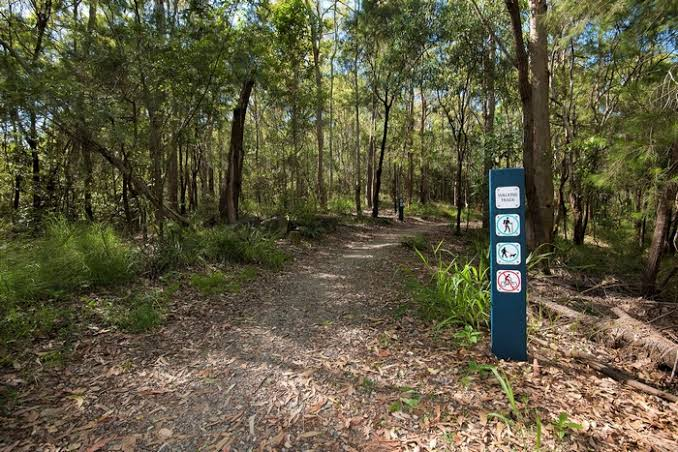
Toohey Road carries traffic along the edge of Toohey Forest, one of Brisbane’s most significant urban bushland reserves and home to a resident koala population that has long faced the basic problem of needing to cross a busy suburban road to move between habitat areas.
Photo Credit: Google Maps
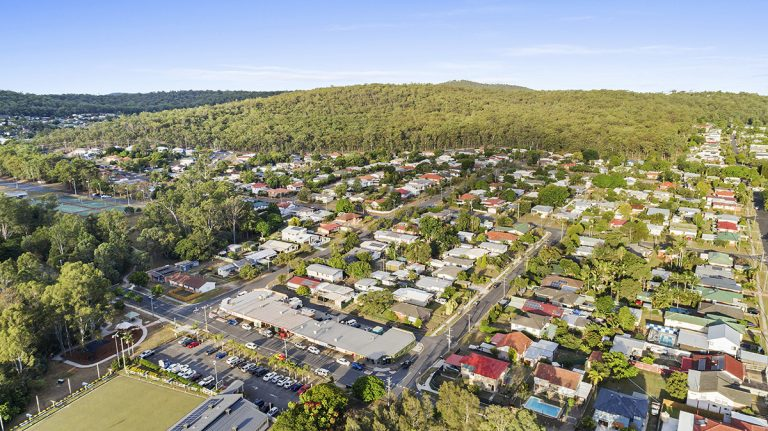
Salisbury sits roughly 12.4 kilometres south of the Brisbane GPO, with Toohey Mountain and its surrounding reserve forming the suburb’s north-eastern boundary.
A purpose-built wildlife underpass on Toohey Road was completed recently, giving koalas and other native animals a dedicated, safe crossing point beneath the road rather than forcing them to navigate traffic at ground level.
The project involved installing fencing fitted with wildlife escape hatches on either side of the underpass to guide animals toward the crossing, along with mulch and natural material placed at the base of the culvert to encourage use and help the structure blend into the surrounding habitat. Some minor finishing touches around the site were completed in early 2026.
The resurfacing works now planned for Toohey Road sit alongside that wildlife infrastructure, meaning the road corridor through this stretch of Salisbury has had a genuinely active year of construction activity, addressing both surface quality for motorists and safe passage for the animals living in the forest beside it.
Connecting suburbs, commuters and bushland
Toohey Road functions as a key connector for residents and commuters travelling between Tarragindi, Salisbury and the broader southern Brisbane network, linking through to Toohey Mountain Reserve and onward toward Sunnybank and Macgregor.
Photo Credit: BCC
Bus route 120 runs along the corridor, connecting Garden City to Brisbane City, with a stop directly at Toohey Forest that has seen its own temporary adjustments during the underpass construction period.
The combination of through-traffic, bus services and proximity to bushland recreation areas makes Toohey Road a road that genuinely earns its place in a resurfacing priority list, carrying enough daily use to justify the investment in a smoother and safer surface.
Next steps for the project
Brisbane’s standard approach to resurfacing involves advance notice to residents and motorists before works begin, with councils typically flagging in advance whether disruption will include night works, temporary lane closures, reduced speed limits or vehicle relocation requirements. A detailed construction schedule for Toohey Road has not yet been released, so the exact timing and duration of works remains to be confirmed.
Once complete, the resurfacing is expected to deliver a smoother, safer driving surface on a road that already represents one of Brisbane’s better examples of balancing traffic infrastructure with wildlife conservation in the same stretch of bitumen.