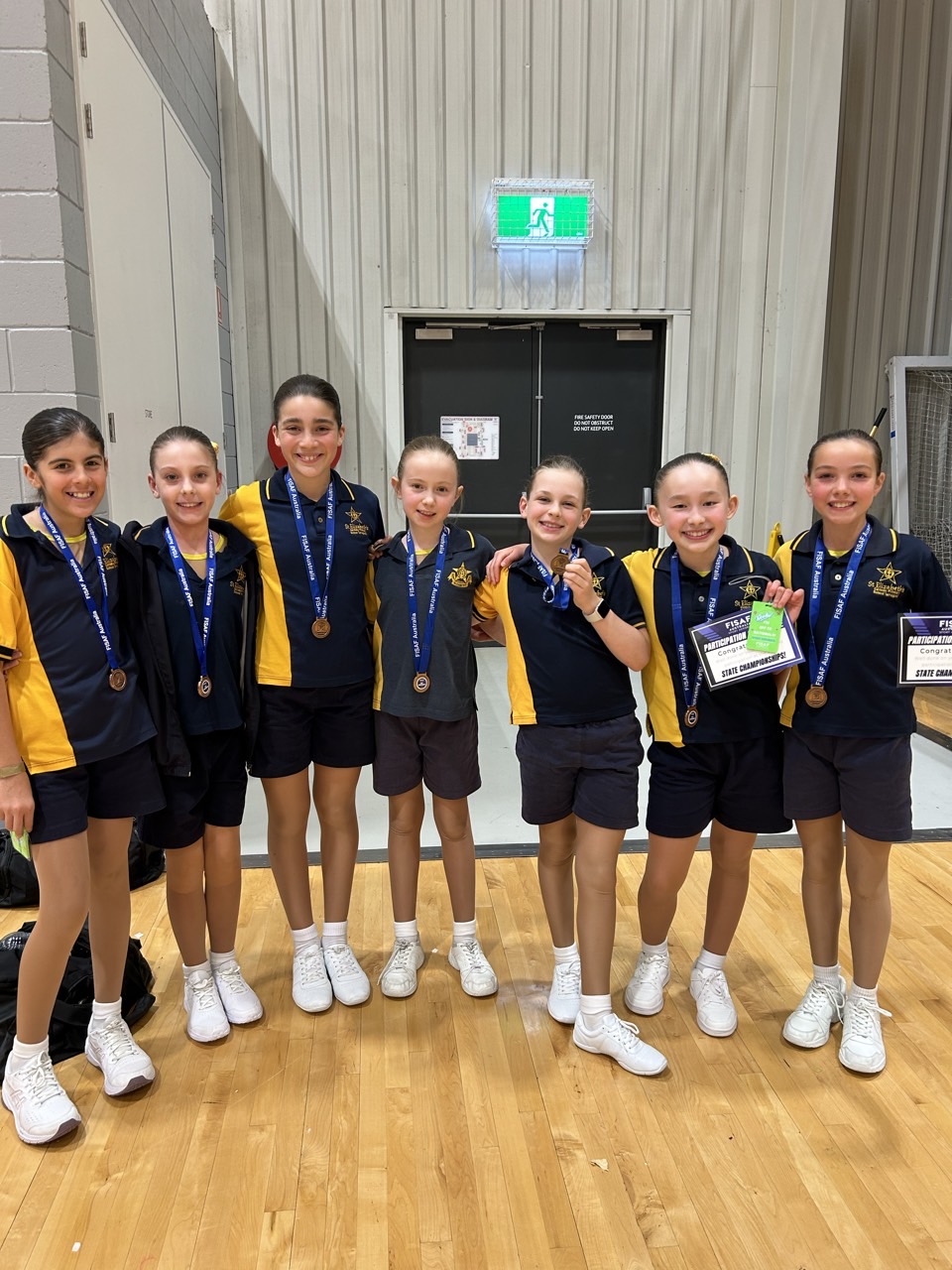
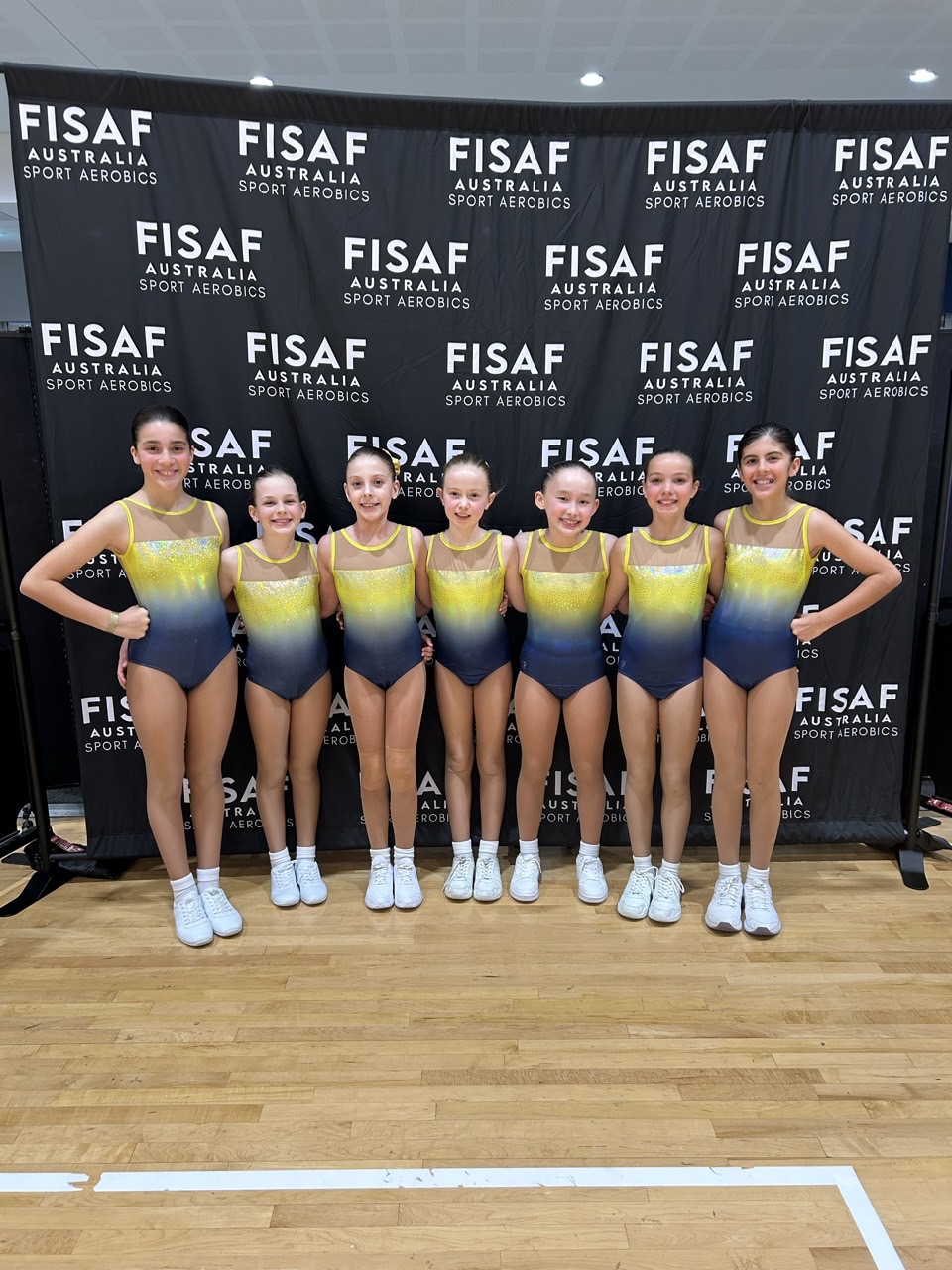
The young Sports Aerobics superstars of St Elizabeth’s School in Tarragindi delivered outstanding performances at the 2024 State Championships held in July and are now preparing to compete in the 2024 National Championshipsin the Gold Coast. The 2024 national competition is set to be the biggest yet, spanning five days and expecting to host nearly 2,500 athletes and over 5,000 spectators.
The school’s young athletes demonstrated their skill, dedication, and teamwork, bringing home impressive results and securing a spot in the upcoming National Championships.
Photo credit: St Elizabeth’s School, Tarragindi/Facebook
Leading the charge was the Year 5-6 Team Illuminate, who clinched an impressive 3rd place finish. This stellar performance has earned them a coveted qualification for the National Championships, set to take place next month.
The Year 3-4 Team Starstruck also put on a commendable display, securing 9th place in their category.
Photo credit: St Elizabeth’s School, Tarragindi/Facebook
The school’s success can be attributed in part to their partnership with Meg Ryan Sport Aerobics, which has been running this extra-curricular activity at St Elizabeth’s on a weekly basis.
Photo credit: St Elizabeth’s School, Tarragindi/Facebook
Established in 2020, Meg Ryan Sport Aerobics specialises in competitive and recreational sport aerobics programs at both school and club levels. Their expertise in school-based programs aligns perfectly with government initiatives promoting health, physical activity, and well-being education.
2024 National Championships
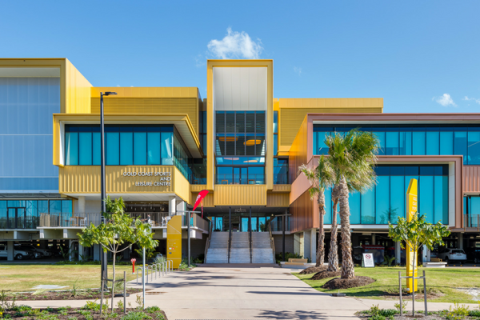
Photo credit: Gold Coast Sports and Leisure Centre/Google Maps
The 2024 National Championships is scheduled for 28 August to 1 September 2024. The event will be held at the Gold Coast Sports and Leisure Centre, transforming the Gold Coast into a hub of aerobic activity and competitive spirit.
As Team Illuminate prepares for the national stage, the entire school community rallies behind them, eager to see their hard work and talent shine on a national level.
Seqwater plans to replace two valves at the Tarragindi Reservoir, an integral part of Brisbane’s water system constructed in 1923. The project is anticipated to result in minor inconveniences, but no water supply interruptions are expected.
Built in 1923, the Tarragindi Reservoir is essential for Brisbane’s early water supply. It shows how the city grew and improved its engineering in the early 20th century. The reservoir was one of the first to use new water supply technologies and has been working for over 100 years.
The construction demonstrates Brisbane’s capability to create important public infrastructure in the period between the two World Wars. Its position on Tarragindi Hill enabled the effective distribution of water through gravitational force.
In its initial stages, the Tarragindi Reservoir represented advancement and played a crucial role in the city’s infrastructure, demonstrating the pioneering mindset of that era. The reservoir has been able to stay in operation for over 100 years due to its design and functionality, showing the long-lasting effectiveness of engineering from the early 1900s.
Shack Dwellers
Photo Credit: Reddit
In 1924, behind the reservoir, there was a community of elderly pensioners living in makeshift homes. These men constructed their dwellings using items like kerosene tins, and they established a self-reliant society. They cultivated their own vegetables and utilized water from the reservoir. This concealed settlement represented strength and camaraderie within the community.
The shack dwellers, numbering about 20 to 30, were a diverse group that included war veterans and other pensioners. They built their homes from discarded materials, showcasing their resourcefulness. Living on seven acres of land and neighboring private property, these people exemplified the independent spirit of that time.
Photo Credit: Brisbane John Oxley Library, State Library of Queensland
Despite their modest lifestyles, they were characterized by a strong sense of camaraderie and reciprocal support. They created a sustainable way of life with limited resources, drawing water from the nearby reservoir and cultivating vegetable gardens. Although now gone, this community remains a poignant chapter in the history of Tarragindi, reflecting a bygone era of resilience and camaraderie.
Valve Replacement Project
Seqwater’s planned maintenance at the Tarragindi Reservoir involves replacing two critical valves to ensure continued reliability in the region’s water supply. The project is scheduled in phases, with preparation and preliminary works occurring in July, followed by the main valve replacements in late July and early August 2024.
While minor disruptions such as increased traffic and construction noise are anticipated, Seqwater has assured residents that the water supply will remain unaffected throughout the process.
The valves must be replaced to ensure the reservoir remains functional. This project highlights the importance of balancing the preservation of history with the demands of modern infrastructure.
Community Interest
Local residents are strongly interested in the reservoir’s history. Discussions on platforms like Reddit demonstrate the community’s appreciation for this historic location. The reservoir is viewed as both an essential piece of infrastructure and a significant historical site, and locals share historical maps and anecdotes to highlight its importance.
The Tarragindi Reservoir is a significant part of Brisbane’s past and present, with modern upgrades highlighting its historical importance and community value. Preserving this site, which serves as both a historical landmark and essential infrastructure, ensures its continued significance for Brisbane’s future.
Recent reports reveal that these schools have exceeded Education Queensland’s class-size targets, sparking debates on the impact of class sizes on educational quality.
Education Queensland’s targets set a maximum of 25 students for prep to year 3 and years 11 and 12, and 28 students for years 4 to 10. However, Salisbury State School, along with Mackenzie State Primary School and Wavell Heights State School, failed to meet these targets for the younger grades.
Salisbury State School reported an average class size of 27 for prep to year 3, highlighting the strain on resources and the need for additional support.
Seville Road State School, with an average class size of 30 students, along with Eight Mile Plains State School and Petrie Terrace State School, each with 29 students, also struggled to meet the target for years 4 to 6. The impact of these overcrowded conditions is most acute at Seville Road State School, which, despite having the smallest student population of 121, reported the largest average class size.
Wavell Heights State School, the largest among the six with 418 students, also faces similar challenges. Despite these numbers, some parents argue that class size alone does not determine the quality of education.
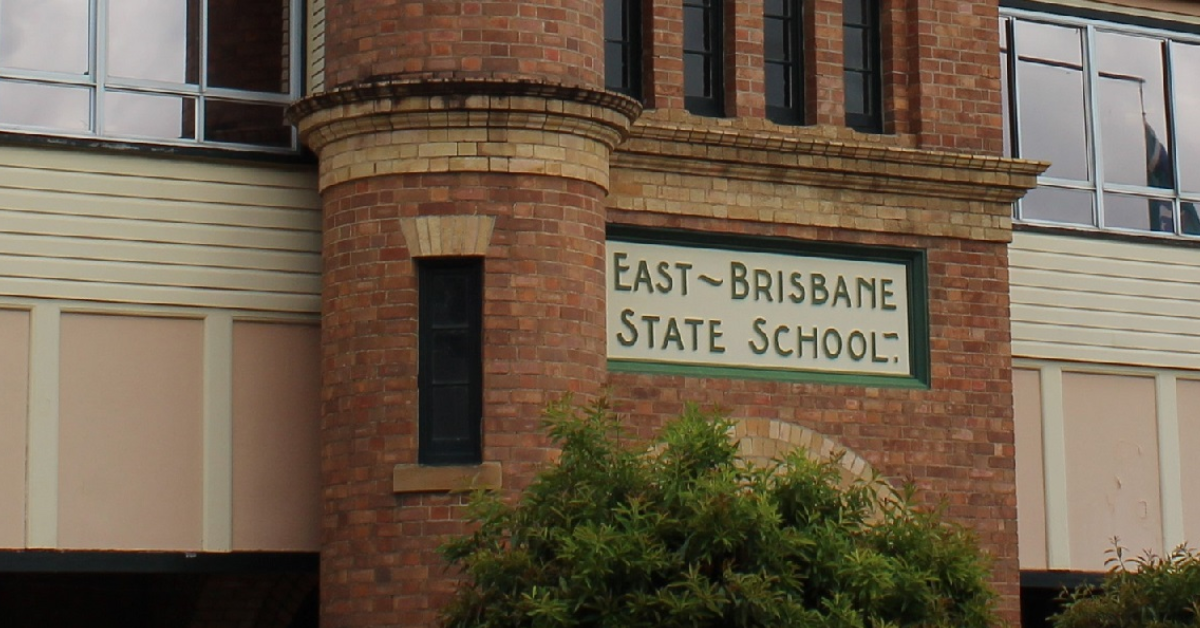
East Brisbane State School serves as a contrasting example. With an average class size of 24 for years 4 to 6, it boasts one of Brisbane’s smallest class sizes. This school also recently celebrated a community victory, securing its location through 2026 after plans for a redevelopment of the Gabba were shelved. Parents and students here report high satisfaction rates, with 100 percent of surveyed students expressing enthusiasm for their school and teachers.
Earnshaw State College, a prep to year 12 school in Brisbane’s north-east, represents another positive outlier. It has managed to keep its class sizes well below the target, with an average of 13 students in years 11 to 12 and only 7 percent of prep to year 3 classes exceeding the target. An Education Queensland spokeswoman highlighted that most classes above the target were only slightly over, often by one or two students. She stressed that class-size targets are guidelines rather than strict limits.
Cresta Richardson, President of the Queensland Teachers’ Union, argued that smaller class sizes enable more individual attention and better educational outcomes. She called for full funding of state schools to ensure every child receives the necessary support to thrive.
As these schools continue to grapple with the challenges of overcrowded classrooms, the debate on the importance of class size versus additional support remains critical. The experiences of schools like Salisbury State School and East Brisbane State School highlight the complexities of providing quality education in diverse and often challenging conditions.
Preparation: Check the Council’s website to see what qualifies for kerbside collection and explore alternative options for usable items.
Collection Day: Place accepted items on the kerbside in front of your property by 6:00 a.m. on the first day of the collection period.
Think Twice Before You Toss:
The Council encourages residents to donate usable items to friends, family, charities, or reuse organisations like GIVIT or Charitable Recycling Australia. The Endeavour Foundation runs Brisbane’s Treasure Troves, which also accepts donations in good condition.
Acceptable: bathtubs, bicycles, carpets, electronics (minus batteries!), furniture, appliances, mattresses, small appliances, and wood under 1.5 metres.
Unacceptable: hazardous materials, garden waste, construction debris, car parts, liquids, batteries (dispose of them at Council’s resource recovery centres!), and large piles exceeding two cubic metres.
Important Tips:
Ensure easy and safe lifting for collection crews by keeping items manageable.
Remove the refrigerator and cupboard doors for easier handling.
Secure items during bad weather forecasts.
The council won’t collect unacceptable items left on the kerb, and illegal dumping fines may apply.
By utilising the kerbside collection service responsibly, Tarragindi residents can declutter their homes and contribute to a more sustainable environment.
Passchendaele Street in Tarragindi is named to commemorate the Third Battle of Ypres, often referred to as the Battle of Passchendaele, serving as a reminder of the significant Australian involvement and the devastating losses they suffered in one of the war’s most brutal battles of World War I.
The Battle of Passchendaele, officially known as the Third Battle of Ypres, took place in the Ypres Salient area of the Western Front, near the town of Passchendaele (modern Passendale), Belgium. Australian troops faced not only the entrenched German defences but also the horrendous conditions of mud and rain, which turned the battlefield into a marshland, impeding movement and contributing to the high casualty rates.
Photo Credit: Australian War Memorial
Key dates during this prolonged battle include:
31 July 1917: The battle begins with initial British attacks.
September 1917: Australian forces join the battle, achieving critical gains at Menin Road and Polygon Wood.
4 October 1917: Australians capture Broodseinde Ridge, marking a significant but costly victory.
12 October 1917: The first major attempt to capture Passchendaele village resulted in heavy Australian and New Zealand casualties. About 6,405 Australians were killed in action or dying of wounds in less than a month near Ypres. Additionally, a further 19,194 were wounded.
26 October to 10 November 1917: The battle’s final phase involved further Australian support, but primary efforts transitioned to Canadian forces who captured Passchendaele on 6 November 1917.
This battle was part of a series of battles in this region, characterised by its strategic importance due to the elevated ridge that offered the occupier significant tactical advantages.
Heroism in the Face of Adversity
On the sombre morning of 12 October 1917, Captain Clarence Jeffries demonstrated extraordinary leadership and courage under dire conditions. Before the assault, the battlefield’s transformation into a muddy marsh posed severe challenges. Jeffries, commanding B Company, took proactive steps with Captain T.G. Gilder to locate the battalion’s starting line, ensuring their unit was correctly positioned for the attack despite the obliterated direction tapes.
As the attack commenced under a British artillery barrage, Jeffries and his men faced intense machine gun fire from German strong points, particularly around Hilside Farm. The German defences included fortified pillboxes and entrenched positions, significantly hindering the Australian advance.
Photo Credit: Wikimedia Commons
Displaying quick thinking and bravery, Jeffries organised a small bombing party to outflank and capture these enemy positions. His group succeeded in taking control of multiple machine guns and capturing several prisoners, briefly reviving the Australian advance.
However, the German resistance was fierce, and as Jeffries attempted to push towards further objectives, he was mortally wounded by machine gun fire during a bold maneuver to neutralise another enemy position. His actions, though costly, marked a significant moment in the battle, showcasing the determination and sacrifice of the Australian forces.
Jeffries’ leadership paved the way for temporary gains and exemplified the spirit of the Australian soldiers who fought at Passchendaele.
Despite their efforts, the Australian units faced overwhelming odds, and the intense enemy fire forced them to retreat, leaving behind many wounded and fallen soldiers, including Jeffries.
Photo Credit: Australian War Memorial
His bravery at Passchendaele was later recognised with a posthumous Victoria Cross, commemorating his bravery and leadership in one of the most challenging battles of the First World War.
Cultural and Memorial Impact
The battles at Passchendaele left a profound impact on Australian military history and are memorialised in various forms, including street names like that in Tarragindi. This serves as a perpetual memory of the sacrifices made by the Australians, illustrating the deep connections between local landscapes and global history.
As Mother’s Day approaches, the community of Tarragindi is gearing up for a celebration that goes beyond mere tradition – the Tarragindi Mother’s Day Markets.
This annual event, which will be held on May 4th, 2024 at Wellers Hills Bowl Club, has become a symbol of community spirit and creativity. It’s also a great place to honour and enjoy the amazing women in our lives.
The Tarragindi Mother’s Day Markets have been an important part of the community’s calendar for years, and people from nearby neighbourhoods look forward to them every year. As a heartfelt tribute to mothers, grandmothers, and all other maternal figures, this beloved custom shows appreciation for their unwavering love, devotion, and sacrifices.
Photo Credit: Facebook/ Mothers Day Market 2022
A Showcase of Local Talent and Creativity
The event focus on creative and talented people from the area. From jewellery made by hand to chocolates made by hand, each stall shows a different side of the creative scene in Tarragindi and the nearby places. People can find one-of-a-kind gifts here that not only honour mums but also help local artists and companies.
Photo Credit: Facebook/ Mothers Day Market 2022
A Culinary Journey of Delight
There aren’t any celebrations that are complete without tasty treats, and the Tarragindi Mother’s Day Markets take this very seriously. There’s something for everyone, from fancy food trucks serving delicious treats to stands selling homemade cakes and pastries. The food at the markets is sure to please, whether you’re looking for a relaxing lunch with your family or a sweet treat to give mum as a gift.
Photo Credit: Facebook/ Mothers Day Market 2022
A Day of Family Fun and Entertainment
This event has a lot of fun things for the whole family to do besides shopping and eating. The air is filled with the joyful sound of live music, making it a great place to enjoy the day. The event is fun for kids of all ages because there are lots of different things to do, like face painting and craft classes.
The Tarragindi Mother’s Day Markets are a celebration of community spirit and getting to know each other. On this day, neighbours honour the important women in their lives by getting together and making memories that will last a lifetime. The friendly people of Tarragindi will make a mark on you, whether you’ve lived there for a long time or this is your first time visiting.
As Mother’s Day approaches, mark your calendars for a day of celebration, appreciation, and community spirit at the Tarragindi Mother’s Day Markets. Whether you’re shopping for the perfect gift, indulging in delicious food, or simply enjoying the company of loved ones, this beloved event promises a day filled with love, laughter, and unforgettable moments. Come join us as we celebrate mothers and the bonds that unite us all.
The Brisbane Oratory In Formation, located in Tarragindi, has denied rumours of plans to establish a Prep-Year 12 school run by an ancient Catholic movement on Messines Ridge Rd.
The unconfirmed reports were fuelled by flyers distributed anonymously and shared on social media, suggesting that the Oratory intended to expand the site to accommodate up to 600 additional attendees at four weekly Latin Masses.
However, the Oratory, tracing its roots back to the 16th century under St. Philip Neri, maintains that these claims are unsubstantiated.
Since its introduction to Brisbane in 2015, the Oratory has expanded its presence, receiving care from various parishes, including Tarragindi and Annerley, from Brisbane Catholic Archbishop Mark Coleridge.
While plans for a new school, tentatively named St. John Henry Newman College, have been accredited, the Oratory clarified that the site has long been zoned for educational purposes.
Contrary to rumors, the primary school set to open in 2026 on the Messines Ridge Rd property will cater initially to Prep-Year 3 students, with eventual plans for expansion to high school grades on a separate site. The Oratory assured that any assertion of purchasing the St. John Fisher land is inaccurate.
Photo Credit: Google Maps
The proposed school has sparked concerns among locals regarding increased traffic congestion and its potential environmental impact. Some residents worry about the strain on already limited parking availability and the loss of green space.
Additionally, there are fears that the development process could bypass community input through Ministerial Infrastructure Designation, limiting public notification and appeals.
State MP Mark Bailey has pledged to monitor the situation closely, emphasising the need for development to align with the residential character of Tarragindi. However, the Archdiocese of Brisbane clarified that St. John Henry Newman College operates independently, catering to families seeking a classical education model, regardless of religious affiliation.