


Afghan Doctor Finds New Beginning at St Elizabeth’s School in Tarragindi

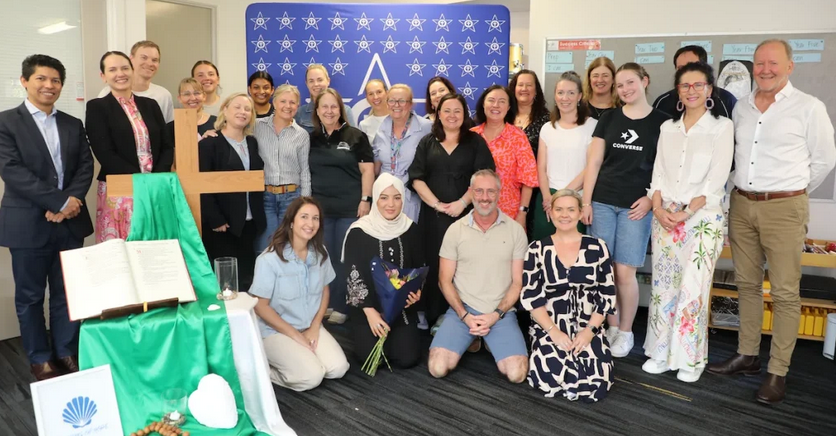
St Elizabeth’s School in Tarragindi has welcomed former Afghan doctor and teacher Dr Masooma Karimi, who has joined the school community as a staff officer after arriving in Australia on a humanitarian visa. Her journey from Kabul to Queensland reflects both personal resilience and the wider efforts of schools and organisations to support refugees in building new lives.


From Kabul to Queensland

Dr Karimi was forced to leave Afghanistan after the Taliban regained control in August 2021. As an educated woman, she faced the reality that continuing her profession in her homeland was no longer possible. She and her family fled to Pakistan, where they endured crowded conditions, but she continued to serve her community by working as a doctor. After years of uncertainty, she and her family were granted Australian Humanitarian Visas in August 2024.

Finding community in education

Her appointment at St Elizabeth’s School came through the Work and Welcome program, a partnership between Brisbane Catholic Education and Multicultural Australia. The initiative, funded through staff contributions, offers refugees and asylum seekers meaningful employment opportunities across Catholic schools and offices in Queensland.

Principal Jenna Webb said Dr Karimi quickly made an impact on students and staff. During a staff formation day in September, she shared her experiences of displacement and her earlier career as both a teacher and medical graduate from Kateb Medical University. Staff described her story as eye-opening, giving the school community a chance to reflect on global challenges of safety and education.

Continuing Her Medical Career

Although Dr Karimi now works in education, her long-term goal remains within medicine. She aspires to continue her medical career in Australia with a specialisation in cardiology. She expressed gratitude for the chance to regain confidence in a new country while contributing to the life of her school community.


Her journey underscores how community-focused initiatives like Work and Welcome can support skilled professionals in re-establishing careers while also enriching local schools with diverse perspectives.

Published 6-Oct-2025

Tarragindi School Delivers Message Through Community Street Art

Students from St Elizabeth’s Catholic Primary School in Tarragindi have completed a public artwork on a traffic signal box as part of the citywide Artforce Brisbane initiative.


Students Showcase Creativity in Tarragindi

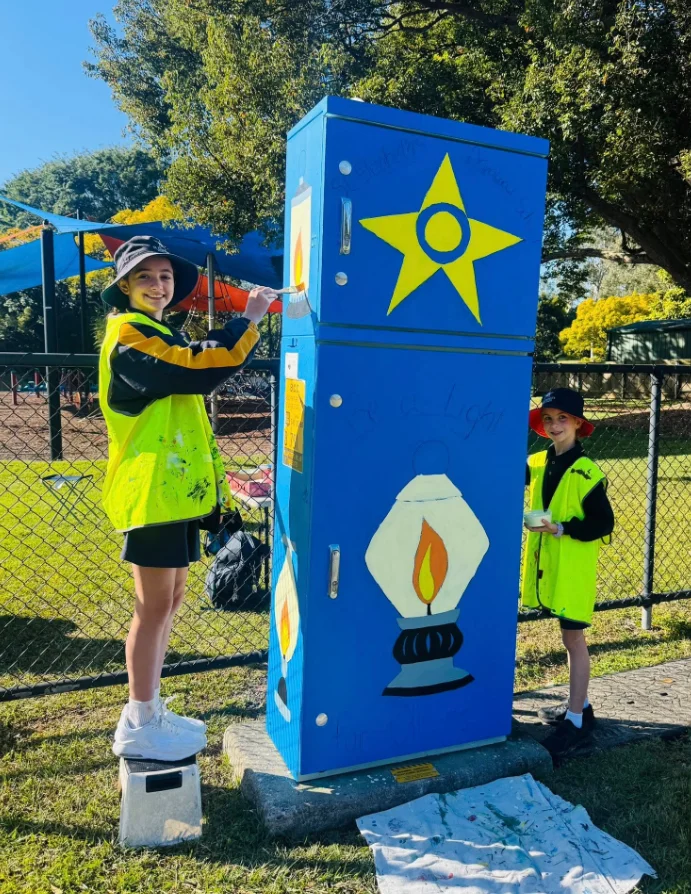
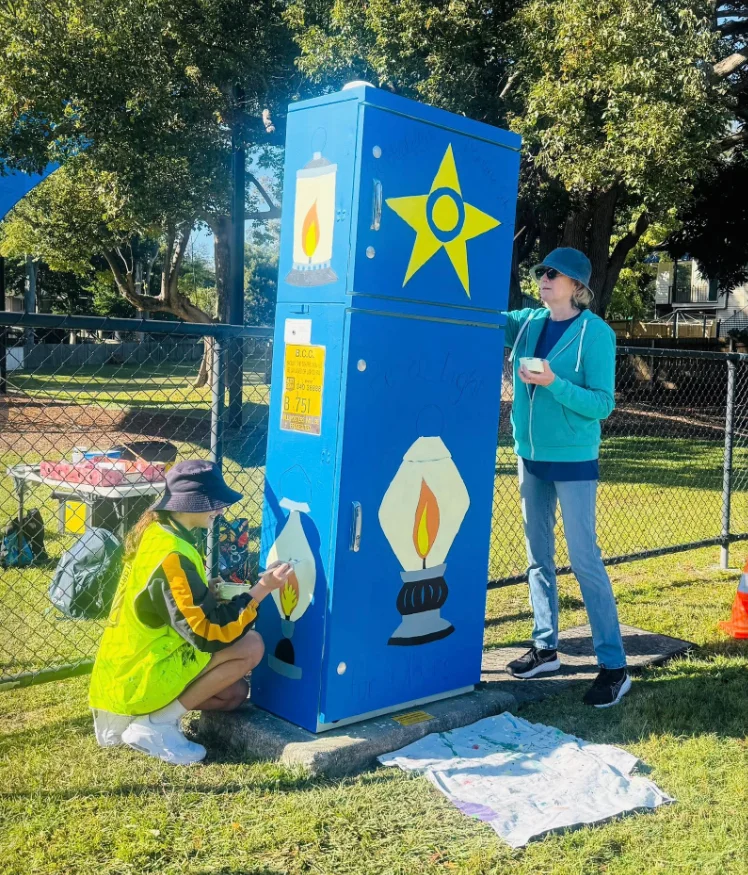
Students from St Elizabeth’s Catholic Primary School have added to the city’s streetscape by painting a traffic signal box on Andrew Avenue, Tarragindi. The artwork was completed under the Artforce Brisbane program, which encourages community participation in public art.

Artforce Brisbane
Photo Credit: St Elizabeth’s School/Facebook

Brisbane-Wide Initiative Supporting Local Expression

Artforce Brisbane, established in 1999, allows residents of all backgrounds to design and paint traffic signal boxes throughout the city. With over 1,200 boxes completed and more than 5,000 volunteers involved to date, the program has become a platform for local storytelling and creativity across suburbs.

A Message of Light and Positivity

The Tarragindi signal box artwork features a bold blue background with a large yellow star and symbolic lanterns on each panel. The phrase “Be a Light for Others” is handwritten across the centre of the piece, aligning with the school’s mission of service and community care

School Involvement in Community Initiatives

Founded in 1958, St Elizabeth’s Catholic Primary School has maintained a strong focus on values-driven education and community engagement. The school currently enrols around 350 students and integrates projects like Artforce Brisbane into a broader educational program that includes leadership, creativity, and social awareness.

 St Elizabeth's School
Photo Credit: St Elizabeth’s School/Facebook

Broader Program Objectives

Artforce Brisbane artworks not only brighten intersections but also reduce graffiti and encourage public ownership of local spaces. The program operates across more than 1,000 traffic boxes citywide, with new opportunities opened annually for residents, schools, and community groups to contribute.

A Lasting Contribution in Tarragindi


The completed artwork now forms part of a growing gallery of public art across Brisbane, offering both visual interest and a message of encouragement. The contribution from St Elizabeth’s students reinforces the value of involving young people in shaping and beautifying their neighbourhood.

Published 29-July-2025

Speed Awareness Monitor Installed Near St Elizabeth’s School in Tarragindi

Just in time for the start of another school year, a Speed Awareness Monitor (SAM) was installed near St Elizabeth’s School in Tarragindi. It’s one of 22 ‘Slow for SAM’ sites added across Brisbane to ensure the safety of children.


Brisbane City Council announced that the initial installation for the 2023 school year is up at these locations but more sites will be determined as the program rolls out:

  • Acacia Ridge State School 
  • Holland Park State School 
  • Anglican Church Grammar School, East Brisbane 
  • Villanova College, Coorparoo 
  • Petrie Terrace State School, Paddington 
  • Upper Brookfield State School 
  • Mount Gravatt State High School 
  • Seville Road State School, Holland Park 
  • Sunnybank State School 
  • St Dympna’s Parish School, Aspley 
  • St Williams Primary School, Everton Park 
  • Yeronga State School 
  • St Elizabeth’s School, Tarragindi 
  • Eagle Junction State School 
  • Windsor State School 

Speed Awareness Monitors, also known as SAM, was launched in 2013 to advise motorists to slow down, especially in school zones where pedestrian activity is high.

Since the launch, more than 200 SLOW for SAM monitors are actively in place in Brisbane. Motorists have also made it a habit to reduce an average of eight kilometres across all locations. 

Photo Credit: BCC

The monitors do not issue notices but work to detect a speeding car and then display ether three messages:

  • a smiley face for vehicles going within the speed limit
  • the car’s speed with a “slow down” message for vehicles going beyond 9 kilometres per hour of the speed limit
  • a big “slow down” message for vehicles driving above 10 kilometres of the speed limit

The Transport Planning and Operations of Brisbane City Council determines where SLOW for SAM signs should be installed. However, locals may contact their ward office or phone Council via 07 3403 8888 if they think a location qualifies for a SLOW for SAM sign.


Tarragindi Girl’s Ear Surgery ‘Will Change Her Life Forever’

Harriet Sanders, a prep student at St Elizabeth’s School, Tarragindi, recently underwent  ear reconstruction surgery – a procedure that will change her life forever.


Read: Tarragindi Teen Hayden Hume Excited to Make His Motorsports Debut


Harriet, 4, was born without fully formed ears because of bilateral microtia and atresia. According to the Ear Community, microtia is a congenital deformity wherein the ear does not fully develop during the first trimester of pregnancy whilst atresia refers to the absence or closure of the external auditory ear canal.

Harriet’s mother, Anna Sanders said that, through the years, they helped treat the little girl’s hearing loss through bone-conducted hearing aids. Anna described her daughter as a very bright, sassy, and funny little girl.  

But through a fundraising campaign led by local charity group ‘Hear and Say’, Harriet has been fitted with bilateral Cochlear BAHA 5 bone conduction hearing aids, a non-surgical hearing solution designed for children. It’s a headband-mounted hearing aid which conducts sound through the bone in Harriet’s forehead.

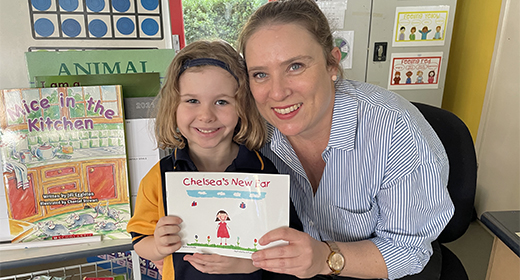
Harriet and her teacher Ms Brigitte Egan (Photo credit: catholicleader.com.au

Reconstructive Surgery

The reconstructive surgery involves two separate 10-12 hour surgeries by a specialist reconstructive surgeon using state of the art 3D printed ear technology. 

Dr Joe Dusseldorp, a reconstructive plastic surgeon based in Sydney, used modern technology to create a 3D print a scaffold of an ear using before connecting it to Harriet’s head.

The scaffold is created with tiny holes that will help Harriet’s tissue to grow into it; then from above her ear and inner thigh, it will be covered with skin grafts so it will look like a normal ear. The second part of Harriet’s surgery, which will be for her other ear, is scheduled in 2022.

Before this surgery was introduced in Australia, children with microtia and atresia, even had to go to the United States for the reconstruction surgery where it’s more expensive to have it done.

“We strongly believe that this will be life changing surgery for Harriet. It will mean that she can go through life with no physical deformity, giving her the confidence and strength she will need to succeed in all aspects of life,” Anna shared.